Monday, July 29, 2024

El San Diego Comic Con 2024: una forma de carnaval

Del miércoles 25 de julio al domingo 29, Comic Con, la convención por excelencia de cultura popular en sentido amplio, se desarrolló en esta ciudad del sur de California, llegando a su nivel pre-pandemia de 135 mil visitantes.  Es un carnaval que bien ilustra la imagen de un torbellino que succiona cuanto se cruza por su camino, transformando objetos y personas en cosas disparatadas que luego escupe sin ton ni son: el auto retro de los Fantastic Four atravesando el escenario de Hall H, en el Centro de Convenciones; los edificios contiguos del Gaslamp District  literalmente “envueltos” de planta baja a terraza en lienzos publicitarios de películas y series, como Spongebob; disfraces imaginativos, muchos indescrifrables; “homeless” durmiendo en carpas precarias; juguetes de peluche tamaño baño; despliegue policial y de voluntarios para organizar el incesante hormiguero humano; cacofonía de sonidos; colas de cuadras; y un caos generalizado de olores y colores.
 
Harrison Ford gives the Red Hulk roar in Hall H
El clímax de Comic Con fue la presentación de Marvel, un show de una hora a todo trapo, mezcla de concierto de rock y circo, en el cual Kevin Feige, presidente de Marvel Studios anunció las cinco superproducciones para 2025 y 2026: Captain America: Brave New WorldThunderbolts * (con un asterisco sin explicación por ahora), Fantastic Four: First Steps y los próximos dos Avengers - Doomsday y Secret Wars.  Luces psicodélicas, música estridente, 6, 500 fans enardecidos, la presencia insospechada de Harrison Ford y Robert Downey Jr, anunciados en papeles protagónicos. Un espectáculo bien coreografiado, combinando clips y breves conversaciones con los actores, parados en el escenario, sin el formato panel.
 
No hubo presentación de DC, el brazo de Warner Bros que alberga el universo de Batman,Superman y Wonder Woman, en Hall H. En reorganización económica desde que Warner devino Warner Discovery en 2022, el conglomerado no parece haber alcanzado todavía velocidad de crucero. Tampoco de Paramount, que debe haber gastado una fortuna publicitaria empapelando edificios con los programas de su plataforma; la empresa es objeto de una compraventa complicada desde hace varios meses. 
 
La relación entre Comic Con y Hollywood tiene un componente geográfico – Los Angeles, donde se cocina el bacalao desde los comienzos de la industria, queda a sólo 200 kilómetros - y otro de relaciones públicas y marketing.  Desde el desarrollo de las redes sociales a mediados de los 2000, quedó visto que la maquinaria publicitaria podía utilizar este evento para difundir masiva y globalmente sus productos.  Hubo ajustes en la última década para contrarrestar publicidad negativa de fans enojados y virales. Pero es el desnorte producido por la pandemia entre el 2020 y 2022, y el tumulto generalizado en Hollywood por los cambios de producción, distribución y exhibición, además de la aparición de un adversario accidental como la inteligencia generativa, quien ha replanteado la relación.  El éxito de Comic Con - más allá de la compra y venta de cómics, novelas gráficas, presencia de autores y exhibidores en el cavernoso Exhibition Hall – está predicado sobre la experiencia colectiva de ir al cine, en vez del consumo individual en espacio privado. De allí que como instrumento de marketing y publicidad Comic Con tiene que adaptarse a la realidad cambiante e inestable de Hollywood en la era digital. 

Fede Álvarez - Comic Con photo
Lo que no ha cambiado es la constancia eficiente con que Hollywood absorbe capital humano – gente creativa o de pericia tecnológica que viene de afuera, con un portafolio en sintonía con las necesidades globales de la industria.  Por eso fue interesante observar cómo Fede Álvarez, un uruguayo nacido en 1978, está en el pico de su carrera, completamente integrado al sistema, hablando sin acento, con gestos, modismos y vestimenta asociados a los directores “cool” de Hollywood. Personaje canchero, de pelo largo algo canoso, con vago aire de profesor, Fede Álvarez hizo el cortometraje Ataque de pánico. Marcianos en Montevideo en una Mac en 2009, que inmediatamente atrajo la atención de ejecutivos en Los Angeles cuando lo subió a YouTube.  Siendo su especialidad el cine de género – suspenso y horror, una constante de la industria  – Álvarez vino a San Diego para presentar Alien: Romulus, el último título de la “franchise” Alien, iniciada en 1979 por Ridley Scott. El panel que presidió fue vibrante, entretenido, incluyendo toques de terror – como la “invasión” de criaturas malintencionadas, manejadas por control remoto, y el reparto de esos esqueletos, de plásticos, con dedos alargados e instintos asesinos, al público de Hall H. (Detrás mío, un chiquito lanzó un aullido de terror).  Ridley Scott, productor del film, estuvo presente, haciendo preguntas en un video grabado para la ocasión. Brillante maniobra publicitaria dos semanas antes del estreno de la película.
 
La oferta en Comic Con es variada para quien no quiere o puede hacer colas nocturnas para entrar en Hall H al día siguiente. El “cosplay” une a grandes y chicos, y algunas de las fotos adjuntadas al artículo, muestran la variedad y creatividad de la oferta. Hay familias enteras con unidad temática, y no faltan bebitos recién nacidos en disfraz de Spider Man, Bumble Bee o mini-guerreros de las galaxias; aparecen también perros disfrazados. Atmósfera de carnaval y buena onda, a pesar del rebrote de Covid y el calor de verano.

Mash-up: Jedi Barbie
El pulso de la cultura popular también se puede tomar participando en los paneles que se ofrecen cada hora entre las 10 de la mañana y las 7 de la tarde, durante los cinco días de la convención.  De lo más interesante resulta siempre la Conferencia sobre el Arte de los Cómics, con profesores y expertos en todo tipo de temas, entre ellos manga, animé, artistas internacionales, géneros, estilos y el estado de la industria editorial.  
 
Con el prestigioso premio Inkpot – alusión al tintero de los dibujantes – se premió al animador y artista de cómics y novelas gráficas Juanjo Guarnido, un español nacido en 1967 y afincado en Paris, dos de cuyas publicaciones - la serie sobre el detective felino Blacksad y la ilustración secuencial de la segunda parte que inventa para la novela El Buscón de Quevedo - merecerían circular ampliamente por la Argentina, si es que ya no lo hacen. Viendo los dibujos de El Buscón en las Indias – versión original francesa publicada en 2019, traducida por Guarnido al castellano, “muy cuidadosamente”, según me dijo - se perciben la influencia y homenaje a Diego de Velázquez. 
 
Un grupo importante de paneles se dedica a recopilar diversos aspectos de la historia de los cómics en Estados Unidos, con figuras destacadas del arte y la industria, que dejan testimonio en mini-historias orales de este fenómeno cultural norteamericano y global. Hubo homenajes esta vez a Batman, en sus 85 años; a la serie SpongeBob Square Pants; homenajes a Stan Lee, organizador de universo Marvel, que hubiera cumplido cien años; al artista underground Harvey Pekar; al japonés Osamu Tezuka, influido por la obra de Disney en los años cuarenta y cincuenta; y al escritor Isaac Asimov. 
 
El fervor electoral norteamericano se coló en muchos paneles, con marcado tono anti-Trump. En el que festejaba la serie de Fox Los Simpson, su creador Matt Groening presentó un clip de Kamala Harris, ungida reciente del Partido Demócrata, de hace unos años, donde se la ve citando una frase de la serie. Recibió una ovación estentórea. 
 
Comic Con ofrece a sus miles de participantes, curiosos y entusiastas de la cultura popular – esa que criticaba la escuela de Frankfurt - una suerte de enciclopedia anárquica, cuya estructura desordenada, conexiones fortuitas y perplejos corredors hubiera quizás encantado a Borges.

Fotos de Jonathan Kuntz
 
Este artículo fue publicado por Ámbito, el diario argentino por quien me acredita como periodista el San Diego Comic Con, el 29 de julio de 2024. https://www.ambito.com/espectaculos/san-diego-celebro-esplendor-la-nueva-edicion-comic-con-n6040671

Monday, July 15, 2024

Alberto Isaac's "En este pueblo no hay ladrones (1965): Announcing the New Mexican cinema". Program notes for the Latin American Cinemateca of Los Angeles screening, July 13, 2024


In 1964, a newspaper cartoonist who had been a swimmer in the 1948 and 1952 Mexican Olympic teams, entered his debut film in the First Contest of Experimental Cinema, sponsored by the Sindicato de Trabajadores de la Producción Cinematográfica, STPC, the union of the hierarchical film industry seeking to attract new talent to a fossilized field.  Winner of the second prize, En este pueblo no hay ladrones, which premiered in Mexico City in September 1965, would be the first of the 13 features Alberto Isaac, el “Güero” as he was affectionally called, directed until his death in the late 1990s (1).

Alberto Isaac
Two recent books published in Mexico celebrate the life and work of Alberto Isaac (1923-1998), firmly perceived to be a reference of Mexican culture in the 20th century (2). A versatile artist, whose work includes cartoons, paintings and ceramics, Isaac took the pulse of Mexican popular culture, viewed from his native state of Colima and Mexico City, as his professional life developed in the 1960s around a group of intellectuals and artists proposing a renovation of Mexican cinema. Besides Isaac, names like Carlos Monsiváis, José de la Colina, Rafael Corkidis, Salvador Elizondo, Paul Leduc and Emilio García Riera would become the Mexican intelligentsia in cultural matters, and specifically film, for the next two decades. They proposed a new approach to Mexican film, one that favored realism and a space for political and social critique. They were influenced by European cinema – Italian neorealism and the French New Wave – as well as the vigorous anti-Hollywood examples of the New Latin American cinema of Brazil and Cuba. They formed the group Nuevo Cine, issued a manifesto and founded a journal (3). Their fervor and advocacy led to the creation of film preservation – the Cineteca Nacional - and cinema programs at the university level, like the Centro Universitario de Estudios Cinematográficos at the Universidad Autónoma, UNAM, with a Filmoteca attached, and the Centro de Capacitación Cinematográfica (4).


It is not by chance, then, that Isaac’s En este pueblo no hay ladrones is emblematic of the call for renewal gripping Mexican cinema in the 1960s and the ensuing changes that unfolded when a new generation of filmmakers entered the scene in the following years: Arturo Ripstein, Paul Leduc, Felipe Cazals, Jaime Hermosillo and Jorge Fons (5). 
 
En este pueblo no hay ladrones
 was shot in 35 mm, in less than a month in Mexico City and the town of Cuautla in the state of Morelos. Critic and future film historian Emilio García Riera adapted with Isaac the short story by Guillermo García Márquez, included in the compilation Los funerales de Mamá Grande, published in 1962.  The jump to international literary fame of the Colombian 1982 Nobel prize winner would come three years later, in 1967, with the publication of Cien años de soledad

Gabriel García Márquez, left
The names of other collaborators in the project, playing cameos, makes for a fun film reference, since it is a collection of the names that would shape the Mexican cultural establishment of the next two decades: none other than Luis Buñuel, as a hell-fire-and-brimstone priest; the writer Juan Rulfo, the other key name of the Latin America literary boom, two of whose stories Isaac would adapt in his 1972 film El rincón de las vírgenes), filmmaker Artur Ripstein; painter Leonora Carrington; artist Luis Cuevas; critic Carlos Monsiváis and García Márquez himself, as the ticket taker in the town cinema. 
 
For those familiar with the narrative, genres and stars of Mexican cinema of the Golden Age – beautifully celebrated this month by the Academy Museum series “Damas de la pantalla: The Women of Mexico’s Época de Oro” – the contrast between these classics of the 1940s and 50s, spectacularly rendered in a Hollywood style, and En este pueblo no hay ladrones, with its realistic simplicity, could not be more glaring.  The aspirations of Nuevo Cine are captured in such a way that Isaac’s film has reached the status of a classic. And for students of cinema, a tangible example of how the golden age was giving way to a new artistic sensibility in the 1960s. is in front on their eyes.
 
Julio Pastor and Rocío Sagaón
The tropical setting of García Márquez’ Colombia is now Mexico, but the contours of the story, its characters and the idiosyncrasies of an isolated town are faithfully rendered in this journey from the word to the screen.  Dámaso, played by Julio Pastor (with a wink to the dapper bon vivant persona of Pedro Infante), has no job and relies on the work of his pregnant wife Ana (Rocío Sagaón), who washes and irons to subsist. He spends his days at the local pool parlor and bar, the only entertainment in town, until one day, at night, he steals the billiard balls, mostly out of boredom and thoughtlessness. An escalation of gossip, violence and xenophobia quickly leads to the apprehension of a passing stranger. Damaso’s involvement with a local prostitute, and a failed attempt to return the balls lead to a tragic fate.  


The film proceeds leisurely, more concentrated in the minute depiction of the characters thancreating drama and suspense. What is foregrounded, notes Carl J. Mora, is “the social examination of a small, poverty-stricken town where nothing ever happens.  Dámaso is seemingly the only resident who dreams of better things but is finally overcome by the stultifying inactivity of the town” (6).
 
Luis Buñuel as the town priest
What is interesting to note of how Isaac – with cinematographers J. Carlos Carbajal and Rafael Corkidi (uncredited), editor Carlos Savage and production designer José G. Jara - captures on location the provincial world that García Márquez was already building in his pre-One Hundred Years of Solitude. This unnamed town functions like Macondo, both a real and a mythical place.  The realistic setting of the film version is used as a jumping point to lay a second layer of meaning, as the town becomes emblematic of a place that is inescapable and circular, and where dreams are squashed.  In this space, between the real and the symbolic, En este pueblo no hay ladrones lays out its compassionate critique.  Even the blunt homily of Buñuel from the pulpit -which in his own films would be a merciless anti-clerical speech – is deflated by the stoic demeanor of the parishioners attending mass.
 
The Latin American Cinemateca of Los Angeles has programmed this beautiful digital restoration of a pivotal film in the history of Mexican cinema (7). If one makes a list of all the titles shown by the Cinemateca over the years – and certainly since 2004 when I started writing the program notes - one realizes how this institution, essential to preserve the film memory of Los Angeles, has passionately celebrated the history of Hispanic cinema in the Americas. 
 

Notes


(1)  David de Wilt. Profile of Alberto Isaac. https://www.grace.umd.edu/~dwilt/isaac.htm, accessed July 4, 2024.
 
(2)  Alberto Argüello Grunstein, “Alberto Isaac. El fluir d ela imagen en la práctica artística transmedial”. Instituto Nacional de Bellas Artes y Literatura / Centro Nacional de Investigación. Documentación e Información de Artes Plásticas, 2023. Online:
https://drive.google.com/file/d/1MWDwmo34KOjjr-YidgKq3-Ud4MvZ2-6W/view
Fernández Reyes, Amaury, comp. Alberto Isaac. A 100 años de su nacimiento (2024).
 
(3)  Carl. J. Mora, “Motion Pictures: 1960-1996”, in Michael Werner, Concise Encyclopedia of Mexico, Taylor & Francis Group, 2001, pp.509-512.
 
(4)  John King, Magical Reels. A History of Cinema in Latin America (1990), pp.132-133.
 
(5)  Isaac was the first director of the Instituto Mexicano de Cine, IMCINE, founded in 1983. For an assessment of the era, see Charles Ramírez Berg, Cinema of Solitude. A Critical Study of Mexican Film, 1967-1983 (1992), pp.46-47.
 
(6)  Carl J. Mora, Mexican Cinema. Reflections of a Society, 1896-1988. Revised edition, 1989, p.109.
 
(7)  This copy of En este pueblo no hay ladrones was made by the Digital Restoration Lab of the Cineteca Nacional, from a 35 mm acetate negative.  The film belongs to the collection of the Fundación Televisa.  The restoration is part of the preservation program of Mexican cinema, a joint effort of the Cineteca Nacional, the Filmoteca UNAM and the Fundación Televisa.
 
Additional sources
 
Joanne Hershfield, David Maciel, ed., Mexico’s Cinema. A Century of Film and Filmmakers (1999).
 
“Manifesto of the New Cinema Group (1961)”, and “Manifesto of the National Front of Cinematographers (1975)”, in Scott MacKenzie, Film Manifestos and Global Cinema Cultures: A Critical Anthology (2014).

Beatriz Reyes Nevares, The Mexican Cinema. Interviews with Thirteen Directors (1976).
 
Ronald Schwartz, Latin American Films, 1932-1994: A Critical Filmography (2005).


Alberto Isaac – Filmography as a director
  
1964    En este pueblo no hay ladrones 
1967    Las visitaciones del diablo
1968    Olimpiada en México, documentary  
1970    Fútbol México 70, semi-documentary
1971    Los días del amor
1972    El rincón de las vírgenes
1974    Tivoli
1976    Cuartelazo 
1977    Las noches de Paloma                       
1981    Tiempo de lobos 
1986    Mariana, Mariana
1988    Maten a Chinto! 
1994    Mujeres insumisas


Monday, June 24, 2024

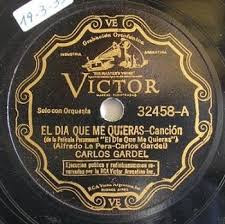
Picture of an exhibition: "Carlos Gardel's 'El día que me quieras' (1935), in "¡Hablada en español!: the Legacy of Hollywood's Spanish-Language Cinema (1929-1930)"


Presented by the Instituto Cervantes, the Los Angeles Cultural Heritage Preservation Society and the city of Los Angeles, this installation celebrating the films made in Spanish by the Hollywood studios between 1929 and 1939 was curated by film archivist Alejandra Espasande-Bouza, using the ground floor of the Pico House, a National Historic Landmark part of the Los Angeles Plaza Historic District.  The exhibit spans the month of June. 
 
The visit will bring to scintillating life not only an aspect of film history local to Los Angeles, but also celebrate how movies, the greatest contribution of the US to the art of the 20th century, worked on a larger scale, in this case, reaching out to the Hispanic market worldwide.

Besides a comprehensive photo exhibit – culled from the Academy of Motion Picture Arts and Sciences’ Margaret Herrick Library, studio archives and private collectors – “Hablada en español” screens two features and one documentary, emblematic of the decade: Drácula (1931), the Spanish-version of the English-language original directed by James Whale; El día que me quieras (1935), the tango musical starring Carlos Gardel, an original version capitalizing on the stardom of the Argentine singer; and the excellent documentary The Spanish Dancer (2017), made by the Spanish director Mar Díaz Martínez, about Antonio Moreno, the star of the silent era active into the late 1950s (Moreno has a short but memorable role as a gallant Mexican crossing paths with vengeful Ethan Edwards (John Wayne) in Ford’s The Searchers).
 
What follows are the notes I prepared for a short talk introducing El día que me quieras, on June 22. They are intended as a record of the event and a succinct bibliography on the exhibition’s subject. 
 
After being introduced by Alejandra Espasande, my former student at UCLA, I wanted to acknowledge the work that led to carving out a field to study the making of over 130 films Spanish-language films, versions and originals:  Robert Dickson and Juan Heinink’s seminal study, Cita en Hollywood (1990) opened the door to the examination of Spanish-language versions, including Lisa Jarvinen’s The Rise of the Spanish-Language Filmmaking (2012). The territory was further mapped out by the symposium on this cinema organized by the UCLA Film and Television Archive and the Academy of Motion Picture Arts and Sciences, in April 2017, during the annual gathering of the International Federation of Film Archives in Hollywood.  This resulted in the book Hollywood Goes Latin (2019), gathering several presentations, and the series “Recuerdos de un cine en español. Latin American Cinema in Los Angeles, 1930-1960” at the UCLA Film and Television Archive, organized by Jan-Christopher Horak, with Alejandra and me as co-curators, September-December 2017.  The current exhibition preserves an expansive photo and poster record of the filmmakers, actors, writers, studio executives and other people involved in these productions. A documentary covering the topic becomes an indispensable next step – all the necessary materials have been gathered by Alejandra Espasande and her team.
 
Carlos Gardel (1890-1935), the epitome of porteño culture and emblematic of Argentina, a spot he now shares with soccer player Lionel Messi, and some decades back with Armando Maradona, does not need much presentation. The Encyclopedia Britannica entry is concise yet pithy for the purpose of these notes: 

"Gardel’s huge popularity as an interpreter of the melancholy ballads of the tango was confirmed in the 1920s and ’30s in nightclubs and motion pictures. One early picture, Luces de Buenos Aires (1931), was filmed in Paris, but later ones were made by Paramount Pictures for the Spanish-speaking market. They include Espérame (1933), La casa es seria (1933), Melodía de arrabal (1933), Cuesta abajo (1934), El tango en Broadway (1934), Tango Bar (1935), El día que me quieras (1935) and The Big Broadcast of 1936 / Cazadores de estrellas (1935).
   Gardel died in a plane crash while on tour. In Buenos Aires his funeral and funeral procession in a horse-drawn carriage were witnessed by tens of thousands of Argentines. Like Rudolf Valentino’s, his tomb became an object of popular pilgrimage." (1)

An immensely popular live and radio performer, a prolific composer of tangos and popular music who sold thousands of records, Gardel understood that sound film was a cutting-edge technology to enhance his career. He must have looked at the path of Al Jolson and Bing Crosby, and not surprisingly, he must have assessed his next move was to make films in Hollywood (2). He first made ten sound shorts in Buenos Aires in 1930, featuring his well-known repertory. Its compilation, the charming Así cantaba Gardel (1936), directed by Eduardo Morera, capitalizing on the nostalgia brought by his death, has been preserved by the Fundación Cinemateca Argentina. The rest of his films – seven features, a short and a sketch in the revue The Big Broadcast of 1936 (1935) - were made for Paramount Pictures, in their Joinville, Paris, and Astoria, New York, studios. Three of these features and the short La casa es seria were shot in Joinville, between 1931 and 1934: Las luces de Buenos AiresMelodía de arrabal and Espérame. At Paramount’s Astoria facility in Queens, New York, between December 1934 and February 1935, a few months before the tragic accident in Colombia, he made the last four and the sketch: Cuesta abajoEl tango en BroadwayEl día que me quieras and Tango Bar (3). The Cinemateca Argentina has done beautiful digital restorations of these Astoria Studios films. The last contract he signed with Paramount gave Gardel unusual creative control (4).
 
When you view these seven features in no particular order you can easily see how Gardel projects an image that is really his persona – a dapper, fun-loving bon viveur with a warm heart. Seen in chronological order, however, the viewer will appreciate how the persona is being constructed, by trial and error. It was a smart collaboration between Gardel, Alfredo Le Pera (1900-1935), his lyricist and screenwriter of all seven features, who also died in the plane accident, and filmmaker John Reinhardt, who directed Gardel’s last two films, including El día que me quieras. This is Gardel for the ages – the one that “cada día canta mejor”, as the Argentine saying goes, “Gardel sings better every day”.
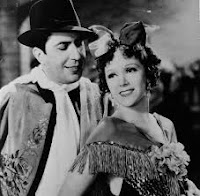
 
Gardel and co-star Rosita Moreno
It has been noted that these Gardel films reflect, in the portrait of the protagonists and the melodramatic circumstances of the plots, themes dear to tango music and lyrics: frustrated love, betrayal, poverty and longing for one’s place of origin.  Specific to these Paramount films are “melodramatic fantasies of romance, fame, international travel and upward social mobility” (5).


Two questions arise concerning the place of these seven films: do they belong to the history of Argentine cinema? Or are they a somewhat forgotten footnote in the development of Hollywood cinema in a decade capture where its hold of the international market was severely tested by a disruptive technology? Argentine film historians make the case that these films are an example of a national cinema with peculiar circumstances of production.  A similar argument can be advanced today for Iranian filmmakers working abroad, outside of the constrictions of the Islamic autocracy – the last films of the late Abbas Kiarostami, Asghar Farhadi and the young Iranians born or raised in Europe after the Iranian revolution.
 
Regardless of the response, it is clear Gardel’s films, mixing comedy and melodrama, loaded with song and dance, backstage musicals of the 1930s, were made to be crowd-pleasers, and this impulse – a popular cinema - helped usher the Argentine golden age of the Hollywood-patterned studio system for three decades.  Besides Gardel, one should remember the creatives and technicians that learned their craft in Los Angeles and brought it to Argentina – the cases of Carlos Borcosque and Tito Davison - or those Americans working in Hollywood that shared their know-how and experience in Argentina, such as John Alton.

Reinhardt, center, between 
Gardel and Rosita Moreno
The case of John Reinhardt, the Austrian-born actor/director hired by Fox studios to direct Spanish-language originals is of particular relevance.  After directing top talent in musicals and comedies in 1933 and 1934 for this studio – Yo, tú y ellaGranaderos del amorUn capitán de cosacos and Dos más uno, dos – Gardel hired him for what ended being his last two Paramount projects: Tango Bar and El día que me quieras.  Rosita Moreno, the Spanish-born singer and dancer, whom Reinhardt had directed at Fox, became the female co-star, and gives memorable dual performances as a mother and daughter in El día que me quieras, and as a reformed con artist in Tango Bar. In 1941, Reinhardt traveled to Argentina for several months, and directed the crime film Último refugio (“Last Refuge”) and the romantic comedy Una novia en apuros (“A Bride in Distress), both for Baires studios. I would like to argue that in all these Spanish-language project, Reinhardt brough versatility and a sense of story that would serve him well in the low-budget noirs he directed in 1947, High Tide and The Guilty, which have been recently restored by the Film Noir Foundation.  Reinhardt has a fun cameo in El día que me quieras, as a film director wrapping up the shoot the Gardel character is doing, where else but in Hollywood.

Astor Piazzolla, left, age 13, an
extra in "El día que me quieras"
What would Gardel have done if he had not died in June 1935?  He still had two more films to make under the Paramount deal, but he had projects in the works with Lumiton studios, in Buenos Aires, and there was talk about going independent.  

We can only imagine the challenges of a Hollywood career, à la Maurice Chevalier. He had not broken into the American market, spoke limited English, but certainly appreciated its fame and appeal.
 
It's all speculation, of course. But viewing El día que me quieras, the wonderfully sentimental story of a singer, the woman he loved and lost, and their child who becomes a fine singer, and listening to the three beautiful songs of the film, “El día que me quieras”, “Sus ojos se cerraron” and “Volver”, one senses Gardel could have been a contender.


NOTES

1)  Encyclopedia Britannica online, accessed June 15, 2024.

2)  For Gardel and cinema, see the works listed in the bibliography below.

3)  For a complete filmography, see list below.

4)  See César Fratantoni's article "Carlos Gardel's Exito Productions, Inc.  A case of Hispanic 
     autonomy?, in Hollywood Goes Latin (2019).

5)  Rielle Navitski, "The Tango on Broadway: Carlos Gardel's International Stardom an the 
    Transition to Sound in Argentina", in Cinema Journal, Fall 2011, p.47.


THE FILMS OF CARLOS GARDEL

Carlos Gardel, historia de un ídolo (1964) - archival compilation directed by Solly Schroder.
 
Así cantaba Gardel (1936) – Compilation of the 1930 shorts directed by Eduardo Morera.

 The Big Broadcast of 1936 (1935) Dir. Norman Taurog. Gardel sketch written Alfredo Le Pera. Cinematography by Leo Tover. Paramount Pictures, Astoria studios. Only in the Spanish version, cut from the English-language version owing to Gardel’s death, prior to the film’s release in the US in September 1935.
 
Tango Bar (1935) Dir. John Reinhardt. Written Alfredo Le Pera. Cinematography by William Miller. Exito Productions. Paramount Pictures, Astoria studios, New York.
 
El día que me quieras (1935) Dir. John Reinhardt. Written Alfredo Le Pera. Cinematography by William Miller. Exito Productions. Paramount Pictures, Astoria studios, New York.
 
El tango en Broadway (1934) Dir. Louis J. Gasnier. Written Alfredo Le Pera. Cinematography by William Miller. Exito Productions. Paramount Pictures, Astoria studios, New York. 
 
Cuesta abajo (1934) Dir. Louis J. Gasnier. Written Alfredo Le Pera. Cinematography by George Webber. Exito Productions. Paramount Pictures, Astoria studios, New York.
 
La casa es seria (1933) Short. Dir. Lucien Jaquelux. Written Alfredo Le Pera. Paramount Pictures, Joinville studios, Paris.
 
Melodía de arrabal (1933) Dir. Louis J. Gasnier. Written Alfredo Le Pera. Cinematography by Harry Stradling. Paramount Pictures, Joinville studios.
 
Esperáme (1933) Dir. Louis J. Gasnier. Written Alfredo Le Pera. Cinematography by Harry Stradling. Paramount Pictures, Joinville studios, Paris.
 
Las luces de Buenos Aires (1931) Dir. Adelqui Millar. Written Luis Bayón Herrera, Manuel Romero. Cinematography by Ted Pahle. Paramount Pictures, Joinville studios, Paris.
 
Ten shorts directed by Eduardo Morera, produced by Federico Valle, with cinematography by Roberto Schmidt. Titles are those of the songs.
Yira, yira (1931) 
¡Leguisamo solo! (1930)
El quinielero (1930) 
Viejo smoking (1930) 
El inquilino (1930) 
Tengo miedo (1930)
Padrino pelao (1930) 
Mano a mano (1930) 
Enfundá la mandolina (1930) 
El carretero (1930) 
Canchero (1930) 
Añoranzas (1930) 
Rosa de otoño (1930) 
 
La loba (1916-1919) Dir. Francisco Defilippis Novoa. Lost film, details uncertain.
 
Flor de durazno (1917) Dir. Francisco Defilippis Novoa. Prod. Federico Valle. Adapted from Hugo Wast’s novel Flor de durazno.
 
Sources: IMDb, Cine Nacional and Simon Collier (“Carlos Gardel and the Cinema”, in Garden of Forking Paths, 1988)


LIST OF SOURCES
 
Collier, Simon, “Gardel and the Cinema”.  In The Garden of Forking Paths (1988)
 
Di Nubila, Historia del cine argentino: La época de oro (1998)
 
Finkielman, Jorge, The Film Industry in Argentina. An Illustrated Cultura History (2004)
 
Jarvinen, Jarvinen, The Rise of Spanish-Language Filmmaking (2012)
 
King, John, Magical ReelsA History of Cinema in Latin America. 2nd ed. (2002)
 
Navitski, Rielle, “The Tango on Broadway: Carlos Gardel's International Stardom and the Transition to Sound in Argentina”. Cinema Journal, vol.51, no.1, Fall 2011, pp.26-49
 
Peña, Fernado M., Cien años de cine argentino (2012)
 
Smith, Steven C., John Reinhardt, Director Without Borders (2022) Documentary short
 
Waldman, Harry, Paramount in Paris. 300 Films Produced at the Joinville Studios, 1930-1933, with Credits and Biographies (1998)