Wednesday, June 21, 2023

Library of Congress Film and Sound Festival: "Carne de cabaret" (1931) dir. Christy Cabanne


The Library of Congress organized its first Film and Sound Festival at the AFI Silver theater in 
Silver Spring, Maryland, from June 15 to 18, 2023.  I received a lovely invitation to introduce three films: Frenchman's Creek (1944, dir. Mitchell Leisen), Craig's Wife (1936, dir. Dorothy Arzner) and Carne de Cabaret (1931, dir. Christy Cabanne).  Here is the last of the three introductions, presented on June 18.


Carne de cabaret (1931) 
Directed by William Cabana [Christy Cabanne]
With Lupita Tovar, Ramón Pereda and René Cardona


Ten cents a dance / That's what they pay me
Gosh, how they weigh me down / Ten cents a dance
Pansies and rough guys / Tough guys who tear my gown
Seven to midnight I hear drums / Loudly the saxophone blows
Trumpets are breaking my eardrums / Customers crush my toes
Sometime I think / I've found my hero
But it's a queer romance / All that you need is a ticket
Come on, big boy, ten cents a dance
 
“Ten Cents a Dance”, Lyrics by Lorenz Hart, music by Richard Rodgers


Like Drácula, the Spanish-speaking film made by Universal Studios in 1931, Carne de cabaret, released the same year by Columbia Pictures, also in Spanish and starring Lupita Tovar (1910-2016), makes for an illuminating case study of how the Hollywood studios implemented a strategy to keep the foreign-language markets supplied with films, once synched sound became a viable technology. A disruptive innovation, expensive to implement but quickly embraced by audiences worldwide, sound meant that keeping the flow of pictures south of the border required a novel strategy: making Spanish-language versions of English-language originals.  Before dubbing and subtitling became the standard practice by the end of the 1930s, the studios - including later in the decade some independent producers - opened Spanish-language divisions to provide such films. The story of foreign versions goes beyond Spanish, to comprise remakes of original English-language films in French, German and other languages. Paramount’s Joinville studios, in Paris, and Astoria, in New York, implemented this strategy, as did MGM, Fox and Columbia in Los Angeles. The English and German versions of Anna Christie (1930), starring Greta Garbo in both, serves as a perfect illustration of this early 1930s business stratagem.
 
Film historian Lisa Jarvinen has written the indispensable account of how the Hollywood studios developed, implemented, and ultimately discarded this practice, with an eye to securing the 30% of the international market represented by Latin America and Spain: The Rise of Spanish-Language Filmmaking: Out from Hollywood's Shadow, 1929-1939 (2012).  For a survey of these films aimed at the Hispanic market, the compilation provided by Juan B. Heinink and Robert G. Dixon, Cita en Hollywood, included in the compilation volume Hollywood Goes Latin (2019) is the point of departure.
 
A preferred practice of these remakes was to use the same sets of the English versions, adapting the original screenplay by Spanish writers as a “versión española” - Spanish version.  Since the directors spoke no Spanish, “dialogue directors” handled the performances. However, what was a cost savings strategy soon revealed that literal translations were no guarantee for making appealing Spanish-language films, and that the variety of Spanish accents was an issue for Hispanic audiences.
 
Even though some Spanish-versions of 1930-1931 and then original Spanish pictures showed that Hollywood could make popular films with stars such as singers Carlos Gardel (Paramount) and José Mojica (Fox), Argentine-born Spanish singer and actress Imperio Argentina and newcomer Lupita Tovar, “overall they were not profitable enough to justify their large-scale production once studios began to suffer the effects of the economic depression”, as Jarvinen writes.  Also, the film industries of Mexico and Argentina, patterned after the American studios, had taken off by the mid-1930s and began their golden age.
 
This is the context necessary to understand how Lupita Tovar, a 20-year-old Mexican actress, with no formal training, scouted by Robert Flaherty for Fox Studios, made Drácula and Carne de cabaret, for Universal and Columbia, in 1931 and starred in Santa  the following year. This melodrama was the first major Mexican success of the sound era; it was directed by Antonio Moreno, the Spanish-born Hollywood star of the 1920s, who had co-starred with Tovar in the Spanish-version of The Cat Creeps (1930), La voluntad del muerto, for Universal, a few months before the Dracula Spanish-version. 
 
Lupita Tovar made more than thirty films, playing mostly ingenues and “señoritas” in a career that spanned two decades on both sides of the border. Some of her films are East of Borneo (1931, Universal), Border Law (1931, Columbia), Vidas rotas (1934), Alas sobre el Chaco (1935, Spanish-language version of Storm over the Andes, Universal, El Capitán Tormenta (Grand National) (1935, Spanish-language version of Captain Calamity, Grand National) and María (1938, based on the 19th century Colombian novel by Jorge Isaac, made in Mexico).
 
In 1932 she married Paul Kohner, a producer at Universal, who headed the foreign language department and who cast Lupita in Drácula. They moved to Berlin when Kohner headed Universal’s European productions but returned to Los Angeles as the political situation deteriorated in Germany with the rise of Nazism. In 1938, Kohner founded the Paul Kohner Talent Agency and managed the careers of many actors and directors, including Marlene Dietrich, Greta Garbo, Dolores del Río, Billy Wilder, Henry Fonda and Ingmar Bergman. The couple had two children, Pancho, a director and producer, and Susan, a film and television actress. Their grandchildren, Chris and Paul Weitz, have successful careers in Hollywood as writers and directors. Currently in the works is a project by the Weitz brothers about the courtship of their grandparents while filming the Spanish Dracula.
 
In The Sweetheart of Mexico. A Memoir. As Told to Her Son Pancho Kohner, published in 2011, Tovar gives us an engaging account of her life and times, spanning her Mexican childhood and adolescence, Hollywood and Berlin in the 1930s, and her career in Mexico until she retired in the mid-1940s. 
 
She writes about Carne de cabaret “Frank Fouce was an assistant director I had met at Columbia Studios. When they were casting the Spanish version of Lionel Barrymore’s Ten Cents a Dance, with Barbara Stanwyck, Frank suggested me for Barbara’s part. So I went to Columbia Studios to do Carne de cabaret, which was the title of the Spanish version. It was directed by Eduardo Arozamena and W. Christy Cabanne. Ramón Pereda and Rene Cardona starred opposite me. Our Spanish-language version took just two weeks. One “take” was all we were allowed, so we had to get it right the first time. This was one of the last films to get away with sexy innuendos before the studios started censoring their own movies to keep the government from interfering”.

Carnet de cabaret
 tells the story of Dorothy O’Neil, a dance hall girl in New York, trying to navigate in a man’s world, as the festival catalog aptly summarizes.  The original version is Ten Cents a Dance, inspired by the Lorenz Hart and Richard Rodgers song of the same title. This English-language original shows the difficulties of finding love in the working-class milieu of taxi dancers, starring 23-year-old Barbara Stanwyck (1907-1990), as an innocent young woman called Barbara O’Neill.  Two years later, in Baby Face, Stanwyck is in full pre-Code mode, as a social climber who uses sex to advance in life. 
 
Carne de cabaret
 uses the same screenplay and dramatic structure. Both versions also utilize the same five or six sets – all interiors, except for one park scene; and mostly the same props. Viewing the films side by side, however, one can notice small variations in dresses, hats and even the order of the scenes. Many of the crowd shots in the dancing hall are the same in both films. There are a couple of short colorful additions in Carne de cabaret, including a sexy scene involving a young messenger watching a dancer undress, as reflected in a mirror.  
 
In another instance, an establishing shot of a busy public space simply lifts a shot from Ten Cents a Dance and shows Barbara Stanwyck instead of Lupita Tovar. One wonders what editor Logan Pearson must have thought looking for the Tovar shot he needed and could not find. He must have hoped no one would notice. 

The Hispanic community of Hollywood in the early 1930s was small but tight, and many of these writers, dialogue directors and actors later brought the American knowhow to the film industries of their home countries, most notably Mexico, Argentina and Spain. In his no-holds-barred memoir My Last Sigh (1984), Luis Buñuel gives a vivid description of the Spanish-language colony during his stay in Los Angeles for a few months in 1930-1931.
 

In Carne de cabaret, Tovar found herself surrounded by several of these interesting Hispanics. Eduardo Arozamena, a Mexican actor who had participated in Drácula, was the dialogue director, while René Borgia, a Venezuelan writer who later settled in New York, adapted the dialogue – colorful and sexy. Ramón Pereda, a Spanish-born Mexican actor, plays Bradley Carleton, the divorced rich man attracted by the innocent Dorothy, and René Cardona, in his first film credit, is Tovar’s husband, Eddie Miller, who turns out to be not what her good heart thought he was. Pereda and Cardona parlayed their stay in 1930s Hollywood into careers in the Mexican film industry.
 
Hispanic audiences in the 1930s – and also today – would have noticed a characteristic feature of the Spanish language (absent in English):  the difference between “tú”, an informal, familiar way of addressing someone, and the formal, respectful “usted”. This distinction plays an important role in presenting the relationship between Dorothy and Carlton, the older divorced man. The use of “usted” until the last line of the film gives a courteous and proper tone to the otherwise immoral proposition Carlton makes to Dorothy earlier in Carne de cabaret.  To the Spanish-speaking audience, their relationship is linguistically respectful but clearly has moved to a more intimate stage when they address each other as “tú” for the first time before “Fin” (The End) appears on the screen. 
 
Two key Americans were involved above the line in Carne de cabaret. One was director Christy Cabanne, listed in the credits as William Cabana, a veteran of the silent era, who had apprenticed under D. W. Griffith, and had the reputation for working efficiently. The other one was Columbia screenwriter Jo Swerling, a Ukrainian Jewish immigrant brought up in the Lower East side whose collaboration with Frank Capra included Platinum Blonde (1931) and Forbidden (1932). In Ten Cents a Dance and Carne de cabaret he captured with gritty realism the New York of the 1920s.  Swerling gave strong visuals to the song; he transformed into dramatic scenes the laments and grumbles of the dance hall girl who graphically describes her situation: 
Ten cents a dance / That's what they pay me/ Gosh, how they weigh me down / Ten cents a dance / Pansies and rough guys / Tough guys who tear my gown / Seven to midnight I hear drums / Loudly the saxophone blows / Trumpets are breaking my eardrums / Customers crush my toes.
 
What holds this film together is the performance of Lupita Tovar: her Dorothy is a charming mix of naiveté and resilience … and a Spanish accent that is studiously neutral, to travel well across the Hispanic world. Her dramatic intensity will look more persuasive to many viewers than that of Barbara Stanwyck’s, especially the well-handled bedroom scene that lays out, through facial gestures and body language, the high price she has to pay to keep her husband out of jail.
 
The Library of Congress premieres tonight a digital restoration of this film that has not been seen for decades.  Maybe Lupita Tovar’s performance will be rediscovered, like Drácula’s, by new a generation of cinephiles.
 
 
\
List of sources
 
AFI Catalog of Feature Films. The First 100 Years, 1893 - 1993 (2006). "Carne de 
    cabaret" (1931).

Heinink, Juan B., and Robert G. Dickson, “Cita en Hollywood”, in Hollywood Goes 
    Latin. Spanish-language Cinema in Los Angeles, edited by María Elena de las  
    Carreras and Jan-Christopher Horak (2019).
 
Jarvinen, Lisa. The Rise of Spanish-Language Filmmaking: Out from Hollywood's 
    Shadow, 1929-1939 (2012).
 
Tovar, Lupita. The Sweetheart of Mexico. A Memoir. As Told to Her Son Pancho 
    Kohner (2011).
 
Tovar, Lupita. Obituary, New York Times, November 20, 2016.


Library of Congress Film and Sound Festival: "Craig's Wife" (1936), dir. Dorothy Arzner


The Library of Congress organized its first Film and Sound Festival at the AFI Silver theater in 
Silver Spring, Maryland, from June 15 to 18, 2023.  I received a lovely invitation to introduce three films: Frenchman's Creek (1944, dir. Mitchell Leisen), Craig's Wife (1936, dir. Dorothy Arzner) and Carne de Cabaret (1931, dir. Christy Cabanne).  Here is the second of the two introductions, presented on June 18.


Craig’s Wife (1936) dir. Dorothy Arzner
With Rosalind Russell, John Boles, Jane Darwell, Alma Kruger and Billie Burke
 
"People who live to themselves, are generally left to themselves."
 
I am pleased to introduce at this inaugural edition of the festival an interesting film from 1936, Craig’s Wife, directed by Dorothy Arzner, adapted from a 1925 play by George Kelly, with Rosalind Russell.
 
The thought occurred to me that even though most of you are familiar with Dorothy Arzner – the only woman director working in Hollywood in the 1930s and 1940s – we can pretend to be the reporter in Citizen Kane tasked to figure out the puzzle of Charles Foster Kane.  Not that Dorothy Arzner proposes an unsolvable mystery, or that there is a Rosebud somewhere to unlock secrets. But the director and her films have been presented as unassailable evidence for critiques of Hollywood; made a cornerstone of feminist criticism; and used as case studies for issues of gender representation, so that these agendas tend to obscure Arzner’s place in commercial cinema and the context in which she produced her films – studio assignments, budget constraints, tight schedules, genre and censorship requirements. Arzner is credited with directing seventeen films from 1927 to 1943.
 
Dorothy Arzner (1897-1979) had a directing career in Hollywood for 15 years, from the late silent era to World War II. She came to directing as an editor and writer with solid experience. Her studio tenure stopped due to ill health, and in her long post-Hollywood years she did training films and commercials, and taught at UCLA, mentoring Francis Coppola in the 1960s.
 
During Hollywood’s golden age, like contemporaries John Stahl, Mitchell Leisen and George Cukor, she directed movies that focused on women’s perspectives. She went further, in her best work, explicitly examining the place and role of women in American society. Christopher Strong (1933) and Dance, Girl, Dance (1940) are excellent examples, as is Craig’s Wife, presented in a 35mm print from the Library of Congress.
 
Her work began to be championed by feminist film critics in the 1970s, as was Ida Lupino’s, the only major female Hollywood feature director of the 1950s. These books and articles saw both directors as Trojan horses in a male-dominated Hollywood. But Arzner’s view of her work in regard to the theory and practice of feminism was complicated. In Directed by Dorothy Arzner, the 1994 study of the filmmaker, Judith Mayne noted that Arzner’s intent was hard to define.
 
When viewing Arzner’s films, it is obvious that she is deeply interested in women, their roles, careers and the need to be respected by men – as the fiery speech of Maureen O’Hara to the leering male crowd in Dance, Girl, Dance makes explicit.
 
Craig’s Wife
 was a big-budget film for low-budget Columbia Pictures; producer Edward Chodorov assembled top talent for the prestige project. Screenwriter Mary C. McCall had established her reputation with Babbitt (1934), The Woman in Red (1934) and A Midsummer Night’s Dream (1935); she wrote eight of the ten "Maisiemovies made from 1939 to 1947. In 1942 McCall became the first woman president of the Writers Guild of America. Cinematographer Lucien Ballard had a five-decade career, working under Josef von Sternberg, Budd Boetticher, Raoul Walsh and Sam Peckinpah (The Wild Bunch, 1969).  Editor Viola Lawrence began at Vitagraph in silents, then became head editor at Columbia. Uncredited, actor and interior designer William Haines shaped the interior of Harriet Craig’s house, giving it a stiffly formal, sterile feeling.
 
Twenty-eight-year-old Rosalind Russell, in her first solo starring role, plays Craig’s wife, with a solid supporting cast of women character actors, including Billie Burke, Jane Darwell, Alma Kruger, Nydia Westman and Dorothy Wilson. The key male figures are John Boles and Thomas Mitchell.
 
Arzner’s version is the second of three adaptations of the 1925 Pulitzer-prize winning play by George Kelly (uncle of Grace Kelly). The first one, with the same title, was released in 1928, with Irene Rich as the protagonist and Warner Baxter as her husband. It was directed by William C. de Mille, the older brother of the legendary Cecil B. DeMille. The play was adapted a third time, as Harriet Craig, in 1950, with Joan Crawford and Wendell Corey, directed by Vincent Sherman.


Except for toning down the original play’s social critique of a woman’s obsession for material possessions, McCall’s adaptation is faithful to the play: over less than 48 hours and through conversations, we view the downfall of a well-bred shrewish wife, who sacrifices husband, family and loyal servants to hold on the mausoleum house she sees as the ultimate form of social stability. Through unity of time, place and action, this “drama of domestic infelicity”- as Frank Nugent wrote in his review for the New York Times - is more connected to Eugene O’Neill than the conventions of the woman’s film.  

The message of the work is telegraphed twice, first through one of the characters noting that “people who live to themselves, are generally left to themselves”, and then repeated in writing at the end of the picture – unnecessarily didactic.
 
Rosalind Russell does not yet inhabit her vibrant, sharp-tongued signature persona, in place three years later in The Women (1939) and His Girl Friday (1940). Here she is a cold, fussy, calculating narcissist.  But it’s Russell’s acting that holds the film together, as each of the characters – different backgrounds and personalities, a great collection of women - interact with her, providing in some cases, welcome comic relief.  Frank Nugent – as did other reviewers at the time - wrote that “the entire weight of the drama depends upon the malign effectiveness of its central character and Miss Russell, here enjoying her first opportunity in Hollywood, gives a viciously eloquent performance”.
 
In a 1974 interview, Arzner told Karyn Kay and Gerald Peary that “I did not want an actress the audience loved. They would hate me for making her Mrs. Craig. Rosalind Russell was a bit player at M-G-M, brilliant, clipped, and unknown to movie audiences. She was what I wanted”.
 
It is up to the audience to assess Harriet Craig, as shown in Arzner’s version.  What does she stand for?  Is Harriet a twisted version of Hedda Gabler, suffocated by her dollhouse?  Does she suffer false consciousness, as Gramsci described those who could not see the circumstances of their oppression?  Is she the vehicle for critiquing a society – 1920s America - in which there are few choices for women like Harriet?  Is it a horror story about a monstrous woman, all surface politeness, destroying those who love her?  Is she a tragic heroine brought down by a fatal flaw? Or, after all, does she embody Freud’s puzzled question: Was will das Weib? What does the woman want?
 
This is the conundrum that makes the film resonant today.
 
 
List of sources
 
AFI Catalog of Feature Films (2006): “Craig’s Wife" (1936).

Fuller, Graham, “The Caring, and Ambiguous, Arzner Touch”. New York Times
   February 6, 2000.
 
Ferrari, “Dorothy Arzner”, International Dictionary of Films and Filmmakers, 2000.
 
Levy, Emanuel, “Craig’s Wife (1936): Arzner’s Favorite Film, Starring Rosalind 
   Russell”.
    https://emanuellevy.com/review/craigs-wife-1936-6/
 
Mayne, Judith, Directed by Dorothy Arzner, 1994.
 
Nugent, Frank, “The Music Hall Presents a Skillful Film Version of That Pulitzer Prize
    Play, Craig's Wife”. New York Times, October 2, 1936.


Library of Congress Film and Sound Festival: "Frenchman's Creek "(1944), dir. Mitchell Leisen


The Library of Congress organized its first Film and Sound Festival at the AFI Silver theater in Silver Spring, Maryland, from June 15 to 18, 2023.  I received a lovely invitation to introduce three films: Frenchman's Creek (1944, dir. Mitchell Leisen), Craig's Wife (1936, dir. Dorothy Arzner) and Carne de Cabaret (1931, dir. Christy Cabanne).  Here is the first of the three introductions, presented on June 15.


Frenchman’s Creek (1944) dir. Mitchell Leisen 

With Joan Fontaine and Arturo de Córdova and Basil Rathbone

 
“The American cinema is a classical art, but why not then admire in it what is most admirable, i.e., not only the talent of this or that filmmaker, but the genius of the system." – André Bazin, Essay on “la politique des auteurs”, Cahiers du Cinéma, April 1957.


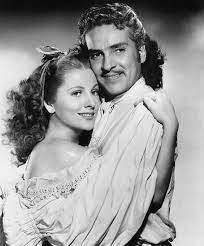
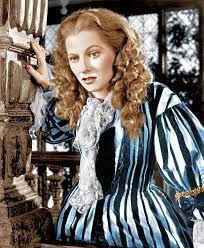
Frenchman’s Creek, an adaptation of Daphne du Maurier’s 1941 novel made by Paramount Pictures in 1944, directed by Mitchell Leisen, starring Joan Fontaine and Arturo de Córdova, winner of an Academy award for its production design, with technicolor cinematography by veteran George Barnes and a luscious score by the classically trained Victor Young, is an excellent example of André Bazin’s observation on the workings of Hollywood during the studio era.  And if the previous sentence should be forgiven for being weighty, it is because the “genius” of the system consisted precisely in shaping disparate esthetic, economic and technological elements into an extraordinary confection designed to appeal to a vast audience. Then and now.


Frenchman’s Creek is presented in a 4K digital restoration by Universal Pictures and the Film Foundation, using a three-strip Technicolor nitrate print from UCLA.


The point of departure for Frenchman’s Creek was the historical novel by du Maurier, an author whose fame was cemented by the huge success of Rebecca, published in 1938, and its 1940 film version by Alfred Hitchcock. Beginning with Frenchman’s Creek, du Maurier gives shape to a different kind of heroine, a bold and fiercely independent protagonist, whose longings for adventure clash with the realities of marriage and motherhood. In Frenchman’s Creek – a novel well worth revisiting – the writer gives us a fantasy of infidelity, a sort of “erotic daydream”, as noted by biographer Richard Kelly. “It is the dream and not the interpretation that has the power to enthrall people”, he wrote.
 
This was the challenge faced by Mitchell Leisen, the veteran Paramount director assigned to the project: how to give sight and sound to a work of imagination, rooted in thoughts and desires. The conventions of the historical romance helped shepherd this melodramatic fantasy, along the lines of The Adventures of Robin Hood (1938) and other swashbuckling pictures. The casting lent a good hand: Joan Fontaine, on loan by David O. Selznick, anchored the film according to genre expectations – even though it reversed the actress’ timid Rebecca persona. Arturo de Córdova, a Mexican star with a supporting role in For Whom the Bell Tolls (1943), played the romantic lead, with an eye to becoming a “Latin Lover” like Gilbert Roland, Ricardo Montalbán and Fernando Lamas. The supporting cast was top talent: Basil Rathbone, Nigel Bruce and Cecil Kellaway.


The festival program provides the film’s plot: Noblewoman Dona St Columb (Joan Fontaine), escaping from a loveless marriage and on the run from her husband, leaves London for the coast in Cornwall. She encounters a romantic French pirate (Arturo de Córdova), but their brief idyllic romance is interrupted by slimy Lord Rockingham (Basil Rathbone).


The adaptation by Talbot Jennings, a graduate from Yale Drama school and seasoned screenwriter with a flair for action adventure and romance pictures (until 1944, Mutiny on the BountyRomeo and JulietThe Good Earth; later Across the Wide MissouriEscape to BurmaThe Naked Maja and The Sons of Katie Elder) was faithful and kept the key lines of dialogue and settings, to foreground the protagonist’s romantic dilemma. 
 

But it is in the director’s eye for décor, costumes and the use of color – more than in the performances – that the film becomes a baroque romantic fantasy, that verges on “camp”.


Mitchell Leisen was a versatile director at Paramount, who brought an appreciation for sets, costume and mise-en-scène in depicting the dynamics of romance, in comedies and dramas such as Midnight (1939), Remember the Night (1940) and Hold Back the Dawn (1941). In the auteur evaluation of Hollywood directors – spurred by Bazin’s essay - he was considered a minor figure. Andrew Sarris included Leisen in the category “lightly likable” of his influential The American Cinema (1968). When the studio system began to collapse, Leisen did not make the transition to independent projects, lacking, one could argue, the strong artistic vision of Hitchcock, Ford, Hawks or Huston.
 
To modern gender critics, details in the film including cross-dressing (pirates pillage a trunk full of women clothing), the foregrounding of exaggerated wigs symbolic of male emasculation, and some outrageous beefcake shots of Arturo de Córdova in his scanty blouses add to the intriguing visual rendering of Dona St Columb’s conflict.
 
More directly, the filmmaker uses sound to highlight the protagonist’s situation; this is presented in the sweeping rendition of Debussy’s piano piece “Clair de lune” as a full orchestra leitmotiv for her longing for adventure and romance.


But Leisen does not let the décor overwhelm the themes, which the film highlights from the original novel, by keeping a key exchange between the pirate and the aristocrat:


 “You forget that women are more primitive than men. For a time they will wander, yes, and play at love, and play at adventure. And then, like birds do, they must make their nest. Instinct is too strong for them. Birds build the home they crave, and settle down into it, warm and safe, and have their babies. You see, my Dona, there is no escape for a woman, only for a night and a day".

From inside the film fantasy emerges a biological counterargument - open to controversy, I’m well aware – that makes it nevertheless a remarkable case of self-reflexivity, a work commenting on itself.

The troubles with the Production Code Administration are not difficult to imagine, “adultery and illicit love without 
 compensating moral values”.  As noted by the AFI Catalog, a compromise was reached when, at the end of the film, the Frenchman tells Dona, “Of course, if you choose to stay in England, there is nothing that has happened between us that  would make your marriage a pretense."
 
A super production for Paramount in 1944, with a budget a little short of 4 million dollars, the film was shot on location in Mendocino County, California, with faithful reconstructions of English Restoration interiors in Los Angeles. Cinematographer George Barnes – a cinematographer from the silent era, who had mentored Gregg Toland, and photographed RebeccaMeet John Doe and Jane Eyre - worked the lighting patterns to follow the protagonist’s increasing sense of liberation, a feature to be nicely observed in this restoration.  Academy awards went to Hans Dreier, Ernst Fegté and Samuel M. Comer for Production Design.  A good source for fascinating production details about Frenchman’s Creek is the oral history/biography of Mitchell Leisen by David Chierichetti, published in 1973.

A final note about the short-lived Hollywood career of Arturo de Córdova. The actor is an example of Hispanic masculinity in the Golden Age of Mexican cinema.  In Spanish, he is described as a “galán de cine”, a leading actor in roles of romance and action.  A modern-day equivalent is Gael García Bernal, a star working in Mexico, Spain, Argentina and the U.S. in films like Bad Education (2004), The Motorcycle Diaries (2004), Amores perros (2000) and Mozart in the Jungle (2014-2018). De Córdova starred in memorable works in a variety of genres during the classic era. He is best remembered as the protagonist of iconic Mexican crime films like La diosa arrodillada / The Kneeling Goddess (1947) and En la palma de tu mano / In the Palm of Your Hand (1951), directed by noir master Roberto Gavaldón. In Él / This Strange Passion (1953), the ferocious satire on masculinity directed by the iconoclast Luis Buñuel, he plays the dark side of the “hidalgo español”, the Spanish gentleman, of which Don Quijote is also a caricature. 
 

De Córdova’s career spanned 1939 to 1959, with 73 films, including the 24 he made outside of Mexico.  Seven of those were productions by American studios. The actor may have seen Frenchman’s Creek as an opportunity to launch a Hollywood career as a leading man, with his good looks and fluent English. A move not unlike that of Pedro Armendáriz, who carved a small niche in westerns.  
 
The actor’s fine performance in Frenchman’s Creek, is perhaps too down to earth in contrast to the “fairy tale princess aura of Fontaine”, as Chierichetti observed. But the Mexican “galán” certainly is an attractive masculine counterpoint to both the bumbling libertine of a husband (Ralph Forbes) and the degenerate Lord Rockingham (Basil Rathbone).


The audience will have the opportunity to appreciate the many facets of Frenchman’s Creek, a fantasy weaving romance and adventure made to entertain in the midst of a world war, by talented individuals above and below the line, working in a true “dream factory”.


List of sources


AFI Catalog of Feature Films. The First 100 Years, 1893 - 1993 (2006). “Frenchman’s Creek" (1944).

Chiarichetti, David, Hollywood director: The career of Mitchell Leisen, 1973.


Cloarec, Nicole, Anne Hall et Xavier Lachazette, “The Enduring Appeal of Daphne Du 

    Maurier's Fiction. New Critical Perspectives”, Revue LISA, Vol. 19-n°52, 2021.  

    https://journals.openedition.org/lisa/13277


de la Vega Alfaro, Eduardo, “Homenaje a Arturo de Córdova”.  Catálogo del Festival 

    Internacional de Cine de Morelia, 2013.    

    https://catalogos.moreliafilmfest.com/pdf/catalogo_2013_1_3.pdf


Drabelle, Dennis, “Swing High, Swing Low: Mitchell Leisen in Perspective”. 

    Film Comment, September – October 1994.


Kelley, Richard Michael, Daphne Du Maurier, 1987.


Lippe, Richard, updated by John McCarty, “John Fontaine”. International Dictionary

     of Films and Filmmakers, 2000.


Sarris, Andrew, “Mitchell Leisen”. The American Cinema. Directors and Directions,

     1929 - 1968, 1968


Friday, March 17, 2023

Documentary matters

  Back from two years of pandemic   disruption, the 73rd   Berlinale – from February 16 to 26, 2023 – offered cinephiles an awesome experience of recent films from all over the planet.  My teaching career spanning two decades in the U.S. has been shaped by the annual trip to this great city thanks the bounty I collect to share with the students, since my first visit in 1985. Through the lens of the Berlinale I have seen contemporary history and politics unfold in its mess and complexity, from the allegorical works of the Fifth Generation of Chinese filmmakers, to Latin American quirky auteurs to Russia’s invasion of Ukraine.

 The documentaries I saw, including the beautiful Sur l’Adamant, winner of the Golden Bear, would make an excellent CSUN Cinematheque series to complement the education of our emerging filmmakers in the newly launched documentary option in our undergraduate program.
 

Simplifying matters, as all teachers are bound to do after time spent in the teaching trenches, I live and die by John Grierson’s motto that documentary is the “creative treatment of actuality”. The films below show how ample and elastic the genre of non-fiction is, and how much the students can learn about the nuts-and-bolts of making one, through examining the five I was privileged to see in the various sections of the Berlinale. The range was wide: from small scale verité films – Sur l’AdamantIn Ukraine – to a slickly narrativized crowd-pleaser like Alex Gibney’s Boom! Boom! The World vs. Boris Becker; to political documentaries based on unseen television footage, like the Argentine El Juicio, and the well-meaning Superpower, directed by Sean Penn, about Volodymyr Zelensky.  

Presented with this range, the students can experience, for example, how a well-crafted observational documentary makes it easier to absorb an immersive experience of a topic on the screen, in a strong contrast to the shock-and-awe of documentaries favored by Netflix and other streamers to please wider audiences.

El Juicio [The Trial] is entirely constructed from over 500 hours of television footage, made by Argentine public television ATC as a record of the trial in 1985 of the nine members of the military juntas, in power in Argentina from 1976 to 1983. Only snippets of that footage were shown in news programs during the duration of the public trial, whose legal, political and ideological ramifications commingled then and today. An experienced filmmaker working on ethnographic and environmental issues, writer / director Ulises de la Orden jumps into a large-scale political documentary, funded, besides Argentine public and private sources, by the Ford Foundation, with support from the Sundance Institute, among other international contributors.

Political documentaries are tricky since they have to deal with truth, point of view and objectivity. In El Juicio the decision was made to tell the story not chronologically and contextualized, but thematically.  There are 18 blocks, most of them based on the gripping testimony of witnesses attesting to the workings of clandestine detention centers. Their titles come from the testimonies themselves. These statements to the judges provide the tone and content of the film, emotional in nature, designed to elicit a passionate response from the audience, through an editing process that distills the original 500 hours to almost 180 minutes.  The historical information is taken for granted – those who remember the trial and lived through those years like me – and in the case of the younger Argentine audience, its absence becomes an invitation to explore the subject outside of the film. In that sense, El Juicio is a gateway for the newer generations to investigate the 1970s – a civil war – and its aftermath – the military defeat in the Malvinas / Falkland War against Great Britain in 1982, triggered a return to the constitutional order. 

The film is a welcome invitation, that deserves to be done right. In this sense, El Juicio is not a partisan film made more than four decades after the bloodbath of the 1970s, agitating for a leftist interpretation of Argentine history.  Its scope is more modest, and, paradoxically, more important: to rescue an audiovisual historical record from a television archive.  It can be compared to the Israeli documentary The SpecialistPortrait of a Modern Criminal (1999, dir. Eyal Sivan), about the trial of Adolf Eichmann in Jerusalem in 1961, using the CBS footage of the proceedings.  At the center of this documentary is, precisely, a villain – emblematic of the “banality of evil”, in the words of Hannah Arendt, who wrote about the trial for the New Yorker.  In El Juicio, the villains are edited in such a manner that they are either pompous clowns or simply elided from the story. There is a dramatic imbalance in the plot, by making the villains absent, ciphers without context.

The Argentine docudrama / political crime film Argentina, 1985, based on the same historical event, but circumscribed to the perspective of the prosecution, falls into the same trap: the handling of the villains.  The film is neither a full melodrama – accentuating the bad stuff of the characters – nor a powerful drama – in which the bad guys are either sort of nice people, like the Hitchcock villains, or complicated sinister figures. In both Argentine works, the military and their enablers are caricatures, ultimately weakening the impact of the story.
For young filmmakers working on controversial historical matters, this is one of the lessons learned from El Juicio; eliminate or soft-pedal the villains at your peril.  Reducing their significance is detrimental to the plot. The most important lesson, however, has to do with research, as discussed by Ulises de la Orden in much detail after the screening of the film: immerse yourself in the material, diligently, with discipline, and begin to carve out the story.

In Boom! Boom!  The World vs. Boris Becker, Alex Gibney, who wrote and directed this two-part documentary for Apple TV + (only the first one was shown in Berlin), constructs a Janus-figure, both a hero and a villain combined in an almost Citizen Kane – kind of way. It is about the rise and fall of the German tennis player Boris Becker, a wunderkind who in 1985 at age 17 won the Wimbledon, the prelude to a remarkable tennis career in the 1980s and 90s, that came crushing down (sex, drugs and rock ‘n roll, so to speak) and ended in jail for tax fraud.  For Part 1, Gibney secured two key interviews with Becker, one in 2019 and another in 2022, before his conviction by a British Court.  Excellent case studies on how to conduct an interview with a subject both charming and cagey, they frame the documentary’s extensive and entertaining use of archival materials and talking heads: fast paced rhythm; a great score and cool sound effects, including nods to the spaghetti western when tennis matches are shown; and knockout interviewees, like John McEnroe and Björn Borg, providing not only color commentary, but comic and dramatic insights into sports stardom.

 As has been noted, Alex Gibney has a knack for capturing larger-than-life figures in fields fraught with corruption, risk and failure: Enron, the Smartest Guys in the Room (2005); Zero Days (2016) and The Inventor, Out for Blood in Silicon Valley (2019). Boris Becker is in the same league.  And like the equally excellent Unitas (2000), directed by Steve Seidman, the opening film in my documentary class, Gibney’s portrait of an athlete show us how extensive research, a knack for capturing the arc of a life in a compelling narrative, and a clever use of cinema’s techniques can make a film esthetically seductive.  I didn’t know who Becker was, and now I can’t wait for part 2, to figure out the rise and fall of a modern athlete, a rascal of sorts sympathetically portrayed.What a student of non-fiction cinema can observe in Gibney’s smart and engaging documentary is that which film does best, to engage the audience emotionally, in a style – boom! boom! boom! sound and visuals – that fits the theme to a tee.  


The situation in Ukraine is the subject of two very different documentaries, one observational, the other first person: In Ukraine, by the Polish directors Piotr Pawlus and Thomasz Wolski, and Superpower, directed by Sean Penn and Aaron Kaufman.
 
Strictly verité, In Ukraine is concerned with showing us what life is like in a war-torn country. It is interested in capturing the experience of the everyday since the Russian invasion a year ago – the lines for food, the shelters, the villages, the roads, the destroyed tanks (and people taking selfies with them).  The Polish filmmakers set out to photograph “the horror, the horror”, with the “dull” parts left in, so to speak, or that state in between calm, anxiety, with the fear that intermittently grips those staying amidst the devastation. The war front itself is not the focus; it is the people and how they spend their days, all done through a static camera and takes long enough to let the viewer “sip” the moment. 

Like good observational documentaries recording an event through time, we are pushed, vicariously, into the experience of disjointed lives. No interviews, or voiceover explanations, or maps, only the “here and now”.  The focus is the Ukrainians and the carpet
bombing that destroys their homes, land and subsistence. The virtues of a well-executed cinema vérité documentary are in plain sight. In Ukraine shows an emerging filmmakers, in 83 minutes, the payoff of recording and editing a collective story, without losing sight of what makes us human (yes, pettiness in a food line qualifies).

The challenges of documenting an event so well covered by daily news on television and cable, blogs and podcasts and print media are in plain sight also in Superpower, co-directed by Sean Penn. Its most curious feature is the mutation of documentary mode: it was originally an expository project featuring Ukraine’s president, an intriguing political figure to a Hollywood fellow actor. While in Kyiv waiting for an interview with Zelensky, Penn and his team were caught by the Russian invasion in February 2022.  The documentary changed gears and became a first-person record (almost a home movie) about the team escaping to Poland in a van.  

Sean Penn recounted the circumstances when he presented the film in the Berlinale. His celebrity wattage married political urgency and made him the interlocutor of President Zelensky in the opening ceremony of the festival, where the president delivered a salutation (with film references) via satellite from Kyiv.  This onstage interjection of a Hollywood star in a world-affairs arena encapsulates Superpower: a documentary about a Hollywood activist making a documentary about Time’s Man of the Year.  Like Icarus (2017), another instance of genre mutation, and a more skilled handling of its political subject – Sean Penn makes himself the story, at the expense of the relevant interviewees - government officials, politicians, reporters, activists – he has access to. What we see is a well-intentioned Hollywood actor playing the role of war reporter, Hemingway style, offering platitudes as political commentary. A saving grace, though, is the wealth of archival materials mixed to the escape footage, beginning with the Maidan Uprising of 2013 - so well covered in the vérité Winter on Fire: Ukraine’s Fight for Freedom (2015) - and providing a solid profile of Zelensky, the comedian and satirist become politician.

The three interviews with Volodymyr Zelensky reveal what is already known, an intelligent and courageous man, savvy with social media, who understands that being in a movie promoted by a Hollywood celebrity helps his country’s cause.  Zelensky says with self-deprecating charm in the last interview that he wants to visit his friend Sean in Malibu after the war. A story with a hopeful open ending.

Finally, the jewel of the crown: Nicolas Philibert’s Sur l’Adamant, winner of the Golden Bear, a spectacular low-key self-effacing instance of cinema vérité that clings to the soul.
 Philibert’s press conference was a master class in documentary cinema. A quiet, slightly disheveled man, in his early seventies, with the look of someone surprised and curious to find himself centerstage, Philibert described his approach to filmmaking. Here are some of the comments I quickly scribbled in my notebook: “I make films to learn”; “I am interested in the vision of the world the people I film have”; “The challenge is to not ‘instrumentalize’ the person with the camera; to not use the power the camera exerts over what is filmed”; “I use the camera to build a relationship, not to weaponize it”; “A documentary brings people out of the shadows and casts a light on them”; “I begin a film without any preconceived ideas, I listen”.
 
The documentaries of Philibert attest to these observations:  Le Pays des sourds (1992), Every Little Thing (1997), Être et avoir (2002, which I often use in class), Nénette (2009), and La Maison de la radio (2013), among the ones that have circulated internationally.  Even the whimsical Nénette, where Philibert observes the daily routine of a 40-year-old orangutan against a soundtrack with comments and conversations of visitors refracted in the glass, his documentaries reflect an interest in the ordinary world, in the functioning of communities – a rural school, deaf children, a mental hospital, a radio station – from an observational vantage point. 

One can compare Philibert with Frederick Wiseman, the king of the rigorous observational documentary in the English-speaking world, and yet, both filmmakers could not be more different in tone and sensibility.  Wiseman is attuned to the workings of institutions, slowly but sharply revealed. He is interested, as Manohla Dargis has noted, in “how these institutions reflect the larger society and what they reveal about human behavior, toggling between the general and the specific”.  Philibert’s approach seems less controlled, open to the mystery and serendipity of the everyday in communities, gracefully going where his subjects take the film.  The loving gaze of the camera dwells on the uniqueness of these groups, and no larger issues are probed. The program notes of the Philibert retrospectives at MoMA, the Pacific Film Archive and the Harvard Film Archive, between 2003 and 2005, after the international success of Être et avoir, perfectly explain Sur l'Adamant, two decades later.  The documentary reflects the director’s view of life from a humanistic lens, and his film strategy – patient observation, sensitivity, humor and great respect – as key to apprehend the human experience in its variety. 

L’Adamant is a daycare center for outpatients in treatment by mental health facilities in the Paris region. It is located on a welcoming wide boat tied to a pier on the Seine river, in the center of the city.  The place, the patients and psychiatric personnel come into focus very slowly and movingly. The portraits of those seeking care, through artistic activities (drawing, painting, singing, a film club) are finely etched by a camera that is both friendly and probing.  It is a testament to Philibert’s skills that this low-key, non-invasive approach yields great insights into the peculiar workings of minds of people marching to the tune of their own drum.  Never made explicit, this approach is, one feels, grounded in the Gospel.

Sur l’Adamant should sail into American shores, pushed by the winds of the Berlinale award. Another great vérité winner did a few years ago, Fuocoammare / Fire at Sea (2016), directed by Gianfranco Rosi.  If any of the five documentaries presented here could make it to the classroom, this is a key one to show how documentary interviews and a camera that manages to stay “invisible” can reveal the human in any person.

Notes
 
Judith Bloch, “Every Little Thing: The Films of Nicolas Philibert”. Pacific Film Archive, February 24-27, 2005: https://bampfa.org/program/every-little-thing-films-nicolas-philibert, accessed March 11, 2023.
 
Peter Bradshaw, “Boom! Boom! The World vs Boris Becker (Part 2) review – Alex Gibney plays a very long game”. The Guardian, February 22, 2023. https://www.theguardian.com/film/2023/feb/22/boom-boom-world-vs-boris-becker-part-2-review-alex-gibney-apple-tv, accessed March 11, 2023.
 
Manohla Dargis and A.O. Scott, “Frederick Wiseman: The Filmmaker Who Shows Us Ourselves”.  New York Times, April 6, 2006. https://www.nytimes.com/2017/04/06/movies/frederick-wiseman-documentaries.html
 
Ulises de la Orden website: https://ulisesdelaorden.com/en/ulises-de-la-orden/
 
Harvard Film Archive series: Nicolas Philibert: Five Films. November 26–29, 2006.
https://harvardfilmarchive.org/programs/nicolas-philibert-five-films, accessed March 11, 2023.
 
MoMA Program Notes, Junio 5-7, 2003: https://www.moma.org/calendar/film/819, accessed March 11, 2023.