Friday, March 17, 2023

Documentary matters

  Back from two years of pandemic   disruption, the 73rd   Berlinale – from February 16 to 26, 2023 – offered cinephiles an awesome experience of recent films from all over the planet.  My teaching career spanning two decades in the U.S. has been shaped by the annual trip to this great city thanks the bounty I collect to share with the students, since my first visit in 1985. Through the lens of the Berlinale I have seen contemporary history and politics unfold in its mess and complexity, from the allegorical works of the Fifth Generation of Chinese filmmakers, to Latin American quirky auteurs to Russia’s invasion of Ukraine.

 The documentaries I saw, including the beautiful Sur l’Adamant, winner of the Golden Bear, would make an excellent CSUN Cinematheque series to complement the education of our emerging filmmakers in the newly launched documentary option in our undergraduate program.
 

Simplifying matters, as all teachers are bound to do after time spent in the teaching trenches, I live and die by John Grierson’s motto that documentary is the “creative treatment of actuality”. The films below show how ample and elastic the genre of non-fiction is, and how much the students can learn about the nuts-and-bolts of making one, through examining the five I was privileged to see in the various sections of the Berlinale. The range was wide: from small scale verité films – Sur l’AdamantIn Ukraine – to a slickly narrativized crowd-pleaser like Alex Gibney’s Boom! Boom! The World vs. Boris Becker; to political documentaries based on unseen television footage, like the Argentine El Juicio, and the well-meaning Superpower, directed by Sean Penn, about Volodymyr Zelensky.  

Presented with this range, the students can experience, for example, how a well-crafted observational documentary makes it easier to absorb an immersive experience of a topic on the screen, in a strong contrast to the shock-and-awe of documentaries favored by Netflix and other streamers to please wider audiences.

El Juicio [The Trial] is entirely constructed from over 500 hours of television footage, made by Argentine public television ATC as a record of the trial in 1985 of the nine members of the military juntas, in power in Argentina from 1976 to 1983. Only snippets of that footage were shown in news programs during the duration of the public trial, whose legal, political and ideological ramifications commingled then and today. An experienced filmmaker working on ethnographic and environmental issues, writer / director Ulises de la Orden jumps into a large-scale political documentary, funded, besides Argentine public and private sources, by the Ford Foundation, with support from the Sundance Institute, among other international contributors.

Political documentaries are tricky since they have to deal with truth, point of view and objectivity. In El Juicio the decision was made to tell the story not chronologically and contextualized, but thematically.  There are 18 blocks, most of them based on the gripping testimony of witnesses attesting to the workings of clandestine detention centers. Their titles come from the testimonies themselves. These statements to the judges provide the tone and content of the film, emotional in nature, designed to elicit a passionate response from the audience, through an editing process that distills the original 500 hours to almost 180 minutes.  The historical information is taken for granted – those who remember the trial and lived through those years like me – and in the case of the younger Argentine audience, its absence becomes an invitation to explore the subject outside of the film. In that sense, El Juicio is a gateway for the newer generations to investigate the 1970s – a civil war – and its aftermath – the military defeat in the Malvinas / Falkland War against Great Britain in 1982, triggered a return to the constitutional order. 

The film is a welcome invitation, that deserves to be done right. In this sense, El Juicio is not a partisan film made more than four decades after the bloodbath of the 1970s, agitating for a leftist interpretation of Argentine history.  Its scope is more modest, and, paradoxically, more important: to rescue an audiovisual historical record from a television archive.  It can be compared to the Israeli documentary The SpecialistPortrait of a Modern Criminal (1999, dir. Eyal Sivan), about the trial of Adolf Eichmann in Jerusalem in 1961, using the CBS footage of the proceedings.  At the center of this documentary is, precisely, a villain – emblematic of the “banality of evil”, in the words of Hannah Arendt, who wrote about the trial for the New Yorker.  In El Juicio, the villains are edited in such a manner that they are either pompous clowns or simply elided from the story. There is a dramatic imbalance in the plot, by making the villains absent, ciphers without context.

The Argentine docudrama / political crime film Argentina, 1985, based on the same historical event, but circumscribed to the perspective of the prosecution, falls into the same trap: the handling of the villains.  The film is neither a full melodrama – accentuating the bad stuff of the characters – nor a powerful drama – in which the bad guys are either sort of nice people, like the Hitchcock villains, or complicated sinister figures. In both Argentine works, the military and their enablers are caricatures, ultimately weakening the impact of the story.
For young filmmakers working on controversial historical matters, this is one of the lessons learned from El Juicio; eliminate or soft-pedal the villains at your peril.  Reducing their significance is detrimental to the plot. The most important lesson, however, has to do with research, as discussed by Ulises de la Orden in much detail after the screening of the film: immerse yourself in the material, diligently, with discipline, and begin to carve out the story.

In Boom! Boom!  The World vs. Boris Becker, Alex Gibney, who wrote and directed this two-part documentary for Apple TV + (only the first one was shown in Berlin), constructs a Janus-figure, both a hero and a villain combined in an almost Citizen Kane – kind of way. It is about the rise and fall of the German tennis player Boris Becker, a wunderkind who in 1985 at age 17 won the Wimbledon, the prelude to a remarkable tennis career in the 1980s and 90s, that came crushing down (sex, drugs and rock ‘n roll, so to speak) and ended in jail for tax fraud.  For Part 1, Gibney secured two key interviews with Becker, one in 2019 and another in 2022, before his conviction by a British Court.  Excellent case studies on how to conduct an interview with a subject both charming and cagey, they frame the documentary’s extensive and entertaining use of archival materials and talking heads: fast paced rhythm; a great score and cool sound effects, including nods to the spaghetti western when tennis matches are shown; and knockout interviewees, like John McEnroe and Björn Borg, providing not only color commentary, but comic and dramatic insights into sports stardom.

 As has been noted, Alex Gibney has a knack for capturing larger-than-life figures in fields fraught with corruption, risk and failure: Enron, the Smartest Guys in the Room (2005); Zero Days (2016) and The Inventor, Out for Blood in Silicon Valley (2019). Boris Becker is in the same league.  And like the equally excellent Unitas (2000), directed by Steve Seidman, the opening film in my documentary class, Gibney’s portrait of an athlete show us how extensive research, a knack for capturing the arc of a life in a compelling narrative, and a clever use of cinema’s techniques can make a film esthetically seductive.  I didn’t know who Becker was, and now I can’t wait for part 2, to figure out the rise and fall of a modern athlete, a rascal of sorts sympathetically portrayed.What a student of non-fiction cinema can observe in Gibney’s smart and engaging documentary is that which film does best, to engage the audience emotionally, in a style – boom! boom! boom! sound and visuals – that fits the theme to a tee.  


The situation in Ukraine is the subject of two very different documentaries, one observational, the other first person: In Ukraine, by the Polish directors Piotr Pawlus and Thomasz Wolski, and Superpower, directed by Sean Penn and Aaron Kaufman.
 
Strictly verité, In Ukraine is concerned with showing us what life is like in a war-torn country. It is interested in capturing the experience of the everyday since the Russian invasion a year ago – the lines for food, the shelters, the villages, the roads, the destroyed tanks (and people taking selfies with them).  The Polish filmmakers set out to photograph “the horror, the horror”, with the “dull” parts left in, so to speak, or that state in between calm, anxiety, with the fear that intermittently grips those staying amidst the devastation. The war front itself is not the focus; it is the people and how they spend their days, all done through a static camera and takes long enough to let the viewer “sip” the moment. 

Like good observational documentaries recording an event through time, we are pushed, vicariously, into the experience of disjointed lives. No interviews, or voiceover explanations, or maps, only the “here and now”.  The focus is the Ukrainians and the carpet
bombing that destroys their homes, land and subsistence. The virtues of a well-executed cinema vérité documentary are in plain sight. In Ukraine shows an emerging filmmakers, in 83 minutes, the payoff of recording and editing a collective story, without losing sight of what makes us human (yes, pettiness in a food line qualifies).

The challenges of documenting an event so well covered by daily news on television and cable, blogs and podcasts and print media are in plain sight also in Superpower, co-directed by Sean Penn. Its most curious feature is the mutation of documentary mode: it was originally an expository project featuring Ukraine’s president, an intriguing political figure to a Hollywood fellow actor. While in Kyiv waiting for an interview with Zelensky, Penn and his team were caught by the Russian invasion in February 2022.  The documentary changed gears and became a first-person record (almost a home movie) about the team escaping to Poland in a van.  

Sean Penn recounted the circumstances when he presented the film in the Berlinale. His celebrity wattage married political urgency and made him the interlocutor of President Zelensky in the opening ceremony of the festival, where the president delivered a salutation (with film references) via satellite from Kyiv.  This onstage interjection of a Hollywood star in a world-affairs arena encapsulates Superpower: a documentary about a Hollywood activist making a documentary about Time’s Man of the Year.  Like Icarus (2017), another instance of genre mutation, and a more skilled handling of its political subject – Sean Penn makes himself the story, at the expense of the relevant interviewees - government officials, politicians, reporters, activists – he has access to. What we see is a well-intentioned Hollywood actor playing the role of war reporter, Hemingway style, offering platitudes as political commentary. A saving grace, though, is the wealth of archival materials mixed to the escape footage, beginning with the Maidan Uprising of 2013 - so well covered in the vérité Winter on Fire: Ukraine’s Fight for Freedom (2015) - and providing a solid profile of Zelensky, the comedian and satirist become politician.

The three interviews with Volodymyr Zelensky reveal what is already known, an intelligent and courageous man, savvy with social media, who understands that being in a movie promoted by a Hollywood celebrity helps his country’s cause.  Zelensky says with self-deprecating charm in the last interview that he wants to visit his friend Sean in Malibu after the war. A story with a hopeful open ending.

Finally, the jewel of the crown: Nicolas Philibert’s Sur l’Adamant, winner of the Golden Bear, a spectacular low-key self-effacing instance of cinema vérité that clings to the soul.
 Philibert’s press conference was a master class in documentary cinema. A quiet, slightly disheveled man, in his early seventies, with the look of someone surprised and curious to find himself centerstage, Philibert described his approach to filmmaking. Here are some of the comments I quickly scribbled in my notebook: “I make films to learn”; “I am interested in the vision of the world the people I film have”; “The challenge is to not ‘instrumentalize’ the person with the camera; to not use the power the camera exerts over what is filmed”; “I use the camera to build a relationship, not to weaponize it”; “A documentary brings people out of the shadows and casts a light on them”; “I begin a film without any preconceived ideas, I listen”.
 
The documentaries of Philibert attest to these observations:  Le Pays des sourds (1992), Every Little Thing (1997), Être et avoir (2002, which I often use in class), Nénette (2009), and La Maison de la radio (2013), among the ones that have circulated internationally.  Even the whimsical Nénette, where Philibert observes the daily routine of a 40-year-old orangutan against a soundtrack with comments and conversations of visitors refracted in the glass, his documentaries reflect an interest in the ordinary world, in the functioning of communities – a rural school, deaf children, a mental hospital, a radio station – from an observational vantage point. 

One can compare Philibert with Frederick Wiseman, the king of the rigorous observational documentary in the English-speaking world, and yet, both filmmakers could not be more different in tone and sensibility.  Wiseman is attuned to the workings of institutions, slowly but sharply revealed. He is interested, as Manohla Dargis has noted, in “how these institutions reflect the larger society and what they reveal about human behavior, toggling between the general and the specific”.  Philibert’s approach seems less controlled, open to the mystery and serendipity of the everyday in communities, gracefully going where his subjects take the film.  The loving gaze of the camera dwells on the uniqueness of these groups, and no larger issues are probed. The program notes of the Philibert retrospectives at MoMA, the Pacific Film Archive and the Harvard Film Archive, between 2003 and 2005, after the international success of Être et avoir, perfectly explain Sur l'Adamant, two decades later.  The documentary reflects the director’s view of life from a humanistic lens, and his film strategy – patient observation, sensitivity, humor and great respect – as key to apprehend the human experience in its variety. 

L’Adamant is a daycare center for outpatients in treatment by mental health facilities in the Paris region. It is located on a welcoming wide boat tied to a pier on the Seine river, in the center of the city.  The place, the patients and psychiatric personnel come into focus very slowly and movingly. The portraits of those seeking care, through artistic activities (drawing, painting, singing, a film club) are finely etched by a camera that is both friendly and probing.  It is a testament to Philibert’s skills that this low-key, non-invasive approach yields great insights into the peculiar workings of minds of people marching to the tune of their own drum.  Never made explicit, this approach is, one feels, grounded in the Gospel.

Sur l’Adamant should sail into American shores, pushed by the winds of the Berlinale award. Another great vérité winner did a few years ago, Fuocoammare / Fire at Sea (2016), directed by Gianfranco Rosi.  If any of the five documentaries presented here could make it to the classroom, this is a key one to show how documentary interviews and a camera that manages to stay “invisible” can reveal the human in any person.

Notes
 
Judith Bloch, “Every Little Thing: The Films of Nicolas Philibert”. Pacific Film Archive, February 24-27, 2005: https://bampfa.org/program/every-little-thing-films-nicolas-philibert, accessed March 11, 2023.
 
Peter Bradshaw, “Boom! Boom! The World vs Boris Becker (Part 2) review – Alex Gibney plays a very long game”. The Guardian, February 22, 2023. https://www.theguardian.com/film/2023/feb/22/boom-boom-world-vs-boris-becker-part-2-review-alex-gibney-apple-tv, accessed March 11, 2023.
 
Manohla Dargis and A.O. Scott, “Frederick Wiseman: The Filmmaker Who Shows Us Ourselves”.  New York Times, April 6, 2006. https://www.nytimes.com/2017/04/06/movies/frederick-wiseman-documentaries.html
 
Ulises de la Orden website: https://ulisesdelaorden.com/en/ulises-de-la-orden/
 
Harvard Film Archive series: Nicolas Philibert: Five Films. November 26–29, 2006.
https://harvardfilmarchive.org/programs/nicolas-philibert-five-films, accessed March 11, 2023.
 
MoMA Program Notes, Junio 5-7, 2003: https://www.moma.org/calendar/film/819, accessed March 11, 2023.


Tuesday, March 14, 2023

"Navalny", a topnotch political documentary for our times

In September 2022, I reviewed Navalny for the Social Impact Media Award annual competition. It received the prize for best editing a few weeks ago. On March 12, 2023, it won a well-deserved Academy Award for Best Documentary.  I went back to my notes, and below is the brief assessment I wrote about this excellent political documentary.


Navalny (2022)   Dir. Daniel Roher    USA     99 min

  
Like the Academy award winners Icarus (2017) and Free Solo (2018), the riveting Navalny is an observational documentary, constructed as an open-ended thriller, unfolding in real time. Less a portrait of the charismatic imprisoned Russian opposition leader Alexei Navalny than the fallout of his poisoning by Putin secret agents in August 2020, the documentary is a griping spy movie. 


Shot during three months, making ample use of television materials, Navalny is anchored by an interview with the protagonist, before his return to Russia in January 2021. Framing the beginning and the end of the film, this interview lays out the key difference between the YouTube videos posted by Navalny, a savvy user of social media, and the superior impact of political documentary.  We can see behind Navalny’s piercing blue eyes, his calculations about allowing a participant observer in his inner circle.  


The pièce de resistance, around which the film has been skillfully edited, is the phone conversation between Navalny and one of the Russian agents, coaxed into describing the poisoning. It also brings in a variety of perspectives, shot with multiple cameras, as the flight back to Moscow is filmed in real time. 

The production team astutely pitched the project to CNN Films and HBO Max, and Navalny stands now as a topnotch example of a political documentary that keeps the viewers glued to the screen, never losing sight of the larger issues.
 

Wednesday, February 22, 2023

Women Talking: the 2023 Berlinale

The Berlinale is back after a 2-year pandemic hiatus, with the foot on the pedal, and a solid selection of films spanning its many sections and industry-related events.  The Competition has 19 titles, of which 6 are directed by women – some established figures like Margarethe von Trotta; others well known in the international festival circuit such as the German Angela Shanelec and Emily Atef; and newcomers making quite a splash, including the Korean-American playwright Celine Song, the Mexican Lila Avilés and the Spanish Estibaliz Urresola.  It’s not difficult to see why the three last ones could very well win awards for writing, directing and acting.

Are there common threads woven into these films?  Do they fulfill the promise to be diverse as the festival proclaims? To gauge this, just check the ads for Mastercard, “proud sponsor of diversity and inclusion”, splattered in the publicity screens around the city.


I attended all those six screening as a tabula rasa, deliberately avoiding reading about the films, so that each title would have an equal opportunity to work out its magic through the tools of cinema. They were Scheherazades at 9am, 12 noon and 3pm spinning their stories with gusto.  It was a rewarding experience.

 Except for one – Music, by Shanelec – these stories are firmly planted in a woman’s point of view. Two of them may exceed the perspective of what little girls can fully comprehend – Tótem, by Avilés, and 20,000 Species of Bees, by Urresola – but they do not cross the boundaries of the female world.


Margarethe von Trotta’s universe is anchored by strong women, firmly planted in their political, social and historical contexts, from The Lost Honor of Katarina Bloom in the mid-70s to Rosa LuxemburgHannah Arendt and Hildegard von Bingen in VisionIngeborg Bachmann. Journey to the Desert, also written by the director, adds one more such captivating protagonist, beautifully rendered by Vicky Krieps (The Phantom Thread). Von Trotta approaches the Austrian poet Ingeborg Bachmann (1926-1973), through a few years of her life, to tackle her complicated personal and artistic relationship with the Swiss novelist Max Frisch. It’s a terrific narrative treatment, alternating two timelines, skillfully edited, exploring the clash between the creative life, fidelity to a vocation and a man, and the needs of a time of one’s own. An icon for German feminists in the 1960s and 70s, the poet comes to life in the film, mercifully devoid of buzz words and ideological simplifications. It invites you see her through what the Spanish philosopher José Ortega y Gasset summed up as “yo soy yo y mi circunstancia, y si no la salvo a ella no me salvo you” (I am myself and my circumstance, and if I don’t save it, I don’t save myself).  Here, Bachmann is given those circumstances, so that the intellectual and literary European world of the 1960s illuminates her quest to be fully and tragically herself.    


In Music, Angela Shanelec, a filmmaker of the 1990s Berlin School, proposes another journey, this time cryptic, elided in time to retell the myth of Oedipus, unfolding in Greece and Berlin, slowly pieced together from various clues, including babies found and parents killed.  Made up of long takes, capturing the rock and sea landscape of the Peloponnesus and the woods around Berlin, and benefitting from understated topnotch performances (Aliocha Schneider and Agathe Bonitzer),Music does not make for easy viewing in the era of Tik-Tok. But the unhurried pace and initial puzzle about the story reward patience; and once it clicks that the stunning choice of Baroque music and modern songs are the sensual vehicle to explore the power of art to redeem life, the enjoyment is complete.  In the press conference, the director alluded to Pasolini’s Oedipus Rex (1967) but noted the differences.  I would have liked to ask her about references to the films of Theo Angelopoulos, who makes myths and history the fabric of many of his key films, using virtuoso long takes and ellipses in time. The very complete Angelopoulos retrospective last fall at the UCLA Film and Television Archive can help make the point.


Emily Atef, an Iranian-born actress and director, educated in France and Berlin, who attended film school in the UK, adapted the 2011 novel “Some Day We’ll Tell Each Other Everything”, by the German writer Daniela Krien, who also wrote the film version with the director.  Keeping the original title and et in a small village in Thuringia, East Germany, in 1990, one year after the collapse of the communism, the story unfolds the sentimental education – an established literary genre that made its way to cinema – of Maria (Marlene Burow), a sensitive young woman and avid reader of Dostoevsky. The catalyst of this journey is Henner (Felix Kramer), an eccentric farmer, twenty-years her senior, also a reader full of yearnings. It is initially a sensual, and brutal, encounter that progresses over a summer. The background surrounding this complicated relationship is finely etched – the perspective of the rural Germans left behind. The title comes from the ending of The Brothers Karamazov, and brings a measure of hope to the tragic ending.  The logistics of shooting the erotic scenes were discussed in the press conference, an exchange that triggered insights into the film by the director and novelist, once again, about the power of art to navigate the wrecks of life.


The Mexican Totem and the Spanish 20,000 Species of Bees share a Hispanic context: the center is the family, as seen and lived through the lens of very young girls. Their observations and experiences build a portrait of a family in crisis, in the first case, and a social critique plus “trans” advocacy, as the ending makes explicit in the second. They are both works directed by newly established filmmakers, produced with financial support from private and public organizations, from their countries and internationally. The directors coax very natural performances from their young protagonists, and the use of hand-held cameras, shakily moved throughout the film, becomes a visual signature to capture the fragmented worlds these children inhabit, and the horror that shapes them.  Luis Buñuel’s legacy of throwing bombs at the family is alive and well – minus his ironic touch. 

There is, however, a a female sensibility capturing the modern zeitgeist: the mothers of these girls are ineffectual, mired in their own existential crisis, and not fully adult.  Both directors tread the path opened by the Argentine Lucrecia Martel, where disorienting soundscapes reflect psychological horrors. Interestingly, in Tótem we can see what fascinated Sergei Eisenstein in his trip to Mexico in 1930, the indigenous world and its cult of death.  It is here rendered through the clash between an elderly patriarch, unable to speak, and his grown-up children, one of whom is about to die. They adhere to beliefs of the pre-Hispanic world, and chant with their friends, in the party that marks the climax of the film, to the Aztec gods of the underworld. I cannot see the commercial prospects of these film, whose reward may be confined to recognition in the festival circuit. 


In the opposite side of the spectrum there is an intelligent crowd-pleaser, Past Lives, written and directed by Celine Song, a Korean-American playwright based in New York, whose debut film this is.  It’s a gripping love story spanning twenty years, through a cleverly rendered flashback, about the changes shaping the life of a Korean woman when she moves as a child from her native country to Canada and New York.  The central device framing the flashback are the protagonist and two men – one Korean, the other American - as observed by a couple, not seen but heard in voice over wondering about the possible relationships among these three.  Past Lives develops the trope of the romantic triangle in ways that will surprise and move the audience, as it effectively captures the experiences of immigration and assimilation.  The director noted in the press conference that in her first work, strongly autobiographical, and spurred by the true bar incident, she was interested in writing and directing a film about choices and the life in between.

 
Past Lives also captures the zeitgeist but from an angle different from the Hispanic films; it delves on characters focused on their careers and the emotional connections they help establish.  It never loses sight of its center: showing the compelling and devastating encounters of the protagonist with her past – rendered by Greta Lee, a stage actress, with Asian restraint.  This cliché of emotional restriction was mentioned in the press conference. 


Can there be a closure for a life not lived? For what may have been? In one way or another, these six films ask and respond to questions attached to the business of living.

Sunday, October 30, 2022

The Spanish "Drácula" (1931): Horror, Hispanic style

I wrote these Program Notes for the screening of Drácula (1931), at the Billy Wilder Theater, Hammer Museum, Los Angeles, October 29, 2022.


This is the second joint program between the Latin American Cinemateca of Los Angeles and the UCLA Film and Television Archive.  Once more this collaboration is devoted to Spanish-language cinema made in Los Angeles in the 1930s.  These two films bookend the decade: Verbena trágica (1938), featured in  May 2021, was an independent production attempting to capitalize on Spanish-language audiences in the US and Latin America once the sound technology was well in place by the mid-30s. Drácula (1931), on the other side, was made by a Hollywood studio figuring out how to keep the large Hispanic market, when the coming of sound disrupted the business model, and the films made in Mexico, Argentina and Spain seemed to challenge Hollywood’s supremacy. (1)


Also, like Verbena trágica, the Library of Congress selected Drácula for preservation in the National Film Registry, finding it “culturally, historically, or esthetically significant”.


Drácula is an interesting example how film esthetics (the horror genre), an innovation (sound) and the business of the Dream Factory intersect in cinema history.  


Based on the epistolary 1897 novel by Bram Stoker, but rerouted through its stage play of 1924, revised in 1927, Dráculawas produced by Universal Studios, as a Spanish-language version of the English original. The studio strategy, in the midst of the Depression, was to shift to pictures less expensive than spectacular productions like All Quiet on the Western Front (1930). Dracula and Frankenstein, made and released in 1931, directed by Tod Browning and James Whale, were the first titles to establish the conventions and visuals of the horror film in the sound era. They were both box-office hits and made Universal Studios synonymous with this new genre.  


The wonderful documentary by Kevin Brownlow, Universal Horror (1998) is a trip through the highlights of these films, featuring the parallel stories of Dracula and Drácula. Well worth watching as a companion piece to this screening. (2)


The Spanish version was shot between October and November 1930, using the same sets of the English version, starring Hungarian-born Bela Lugosi (the vampire reference par excellence) as Count Dracula and Helen Chandler as Mina, the virginal English woman who becomes his victim.


In an interesting choice of casting by producer Paul Kohner, in charge of the foreign-version productions at Universal, a very young Mexican actress, Lupita Tovar became Mina’s Hispanic version, Eva, equally virginal looking, but costumed in sexy outfits.  In her charming memoir, published in 2011, Lupita Tovar devotes a chapter to her second film for Universal, after establishing herself in La voluntad del muerto (1930), the Spanish version of The Cat Creeps


“George Melford was hired to direct, with a cast including Carlos Villarías, Pablo Álvarez Rubio, Barry Norton (from Argentina), Carmen Guerrero, Manuel Arbó, Eduardo Arozamena and me. We used the same sets and the same script translated into Spanish, but a completely different crew led by cameramen George Robinson. Paul [Kohner] was the supervising producer of both films but his heart was with our version.  We shot at night, while the English-speaking cast filmed during the day. The American version had started two weeks earlier so we were able to use the sets they had already finished with.


Only Carlos Villarías, who played Count Drácula, was allowed to see dailies. He was encouraged to be as “Lugosi-like” as possible. The rest of the us were on our own. Paul wanted our film to be better than the English-language version. George Robinson, our lighting cameraman, lit our sets with creepy shadows and added cobwebs everywhere. My nightgown was much sexier than the one Helen Chandler were and, perhaps because we were filming at night, our actors seemed even more menacing.


We had tremendous respect for our director George Melford. He was like a god to us. But there was some tension on the set because we knew we were competing with the American Dracula; we felt pressure to perform better than them. We were trying so hard. We finished our film in only twenty-two nights; the American version took seven weeks." (3)


Pancho Kohner - the son of Lupita Tovar and Paul Kohner, who were married in 1932 - recounted how 
Drácula, unseen for decades and hence barely warranting a mention in film history books, was found in a New Jersey warehouse in the 1970s.  The American Film Institute made a print for a Universal Studios retrospective at the Museum of Modern Art. But the nitrate negative had begun to decompose and was incomplete. The only other existing print was found at the Cinemateca de Cuba, and after some maneuvering by the UCLA Film and Television Archive, navigating Cold War era restrictions, a new negative was struck in 1991. Drácula “resuscitated” in Havana, as the program notes for a screening of the restored film in Cuba cheekily noted. And the film has been available since, as a bonus material for the DVD and BluRay releases of the original Dracula. (4)


Those interested in the ramifications of Dracula into the Hispanic    imagination will enjoy watching, or reviewing in this context, the intriguing variations woven into the blood-thirsty count by Guillermo del Toro in his debut film Cronos (1993): the erotic angle is erased and a Catholic sense of sacrifice and redemption underpins the Mexican vampire’s last and fatal decision.  A more orthodox take on the bloodthirsty vampire is the classic mid-century Mexican horror El vampiro (1957), directed by Fernando Méndez.


One final note, the grandchildren of Lupita Tovar and Paul Kohner, the filmmakers Chris and Paul Weitz (About a Boy, A Better LifeFatherhood, Operation Finale) are writing and directing Spanish Dracula, what else but the love story of their grandparents during the filming of the Spanish version. (5)


Notes


(1) As noted by film historian Lisa Jarvinen, 30% of Hollywood trade was with Latin America. The Rise of Spanish-Language Filmmaking: Out from Hollywood's Shadow, 1929-1939 (2012).

   For a recent survey of these films aimed at the Hispanic market, see Juan B. Heinink and Robert G. Dickson, “Cita en Hollywood”, in Hollywood Goes Latin. Spanish-language Cinema in Los Angeles, edited by María Elena de las Carreras and Jan-Christopher Horak (2019).


(2) Universal Horror (1998), directed by Kevin Brownlow. YouTube: https://www.youtube.com/watch?v=58L_iy6UV_4


(3) Lupita Tovar, The Sweetheart of Mexico. A Memoir. As Told to Her Son Pancho Kohner (2011). Chapter 15, pages 80-81.


(4) The saga of the missing parts, the Cuban discovery and the restoration is recounted by David J. Skal in Hollywood Gothic: The Tangled Web of Dracula from Novel to Stage to Screen (2004) and in Spanish by Reynaldo Gonzalez “Drácula resucitó en La Habana” (1991). See also Roberto Green Quintana, “Buried in the Vaults: The Restoration of Hollywood’s Spanish-language films”, in Hollywood Goes Latin. Spanish-language Cinema in Los Angeles, edited by María Elena de las Carreras and Jan-Christopher Horak (2019).


(5) Mike Fleming, “Chris & Paul Weitz to Direct Spanish Dracula; Love story of their Mexican silent film actress grandmother Lupita Tovar and storied Universal Exec Paul Kohner”. Deadline, February 15, 2022.

https://deadline.com/2022/02/chris-weitz-paul-weitz-the-spanish-dracula-mexican-actress-grandmother-lupita-tovar-unversal-exec-paul-kohner-1234926792/


Saturday, March 5, 2022

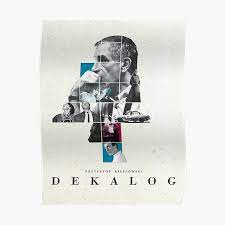
"Dekalog 5" (1988) and "Nazarín" (1958) - A Catholic viewer's thoughts

Criteria: The Catholic Film Podcast, hosted by Thomas Mirus and James Majevski, invited me to discuss Krzysztof Kieslowski's Dekalog 5 and Luis Buñuel's Nazarín (1958), in January 2021 and February 2022.

As they note in their website, it is a film club podcast devoted to works of high artistic caliber and Catholic interest, exploring the 1995 Vatican film list proposing 45 important films, celebrating the centennial of cinema.

This is the link to the website: https://www.catholicculture.org/commentary/category/criteria/


Below are the notes about the podcasts and the links.  Both films engage the value of the human person, and in different ways, the relationships with one another and God.


Dekalog 5 and A Short Film about Killing (1988)

https://www.youtube.com/watch?v=uYdtpAoLjo8


This film makes us confront on a visceral level the horror of taking a human life, even the life of someone we might find despicable. It is the fifth installment of Dekalog, the famous Polish TV series inspired by the Ten Commandments.


Dekalog: Five, which was expanded into the feature-length A Short Film About Killing, coincided with an intense debate over capital punishment in Poland, and in the year of its release (1988) the nation finally suspended use of the death penalty.


Catholic film scholar Maria Elena de las Carreras often uses Dekalog: Five to teach her students at Cal State Northridge about the value of life. She brings a lively energy to the discussion along with a deep knowledge of Polish cinema and, in general, the work of filmmakers living in totalitarian regimes.


Thomas tracked Maria Elena down because of an article on Kieslowski she wrote for Crisis magazine twenty years ago—which, she tells us, she sent to Pope John Paul II, and received a letter from his secretary saying it had been read “with great interest”.


Nazarín (1958)


https://www.youtube.com/watch?v=l6ts3b0xyD0


One of the boldest inclusions on the 1995 Vatican film list comes from an atheist director well known for his anti-clerical films, Luis Buñuel.


His 1958 film Nazarín does not seek to discredit the Church by portraying an obviously hypocritical, venal or sensual priest. Rather, protagonist Fr. Nazario is a Quixote figure, unable to make any difference in this miserable world no matter how strictly he follows his religious code.


Film scholar María Elena de las Carreras returns to the podcast to talk about Buñuel (1900-1983) as an artist unable to escape his post-Tridentine Spanish Catholic upbringing. His vision replaces the supernatural with humanism, yet he does not believe even this can save us. For Buñuel, whatever moments of human kindness we may encounter along the way cannot change the fact that life is hell.


It is interesting to compare Nazarín with many other priest films, including Monsieur Vincent (1947)Diary of a Country Priest (1951); The Silence (2019); The Fugitive (1947); and Léon Morin, Priest (1961).


Sunday, July 11, 2021

Psychological horror and the faux-documentary make a splash in Andrés Kaiser's debut feature "Feral" (2018)


“Aquí es alguien que busca a Dios y se le aparecen estos niños salvajes, cómo abre puertas oscuras, desatando demonios”. 


(Here is someone who is looking for God; these wild children appear; dark doors are open, unleashing demons)


Andrés Kaiser, El Universal (Mexico City), September  26, 2020


A remarkable debut film by Andrés Kaiser, Feral is a self-assured exploration of psychological horror and the documentary style. And as such it is a befitting choice for the new series at the Latin American Cinemateca, Cine Nepantla - Celebrating liminal spaces in film, music and poetry. Taking its name from the language of the Aztecs in the 16th century, ‘nepantla’ describes the state of living in-between different cultures, reflecting the encounter of the Hispanic and indigenous worlds. By extension, this new screening series presents titles that open up a rich dialogue about style, substance and context, from multiple perspectives.


Feral was the film selected for Cine Nepantla in 2020. It would have been screened last March at the Downtown Independent – the site of the Azteca theater in the thirties and forties, a venue in downtown Los Angeles showing Spanish-language cinema. The screening was cancelled, and also the Q&A with director Andrés Kaiser, due to the Covid-19 pandemic. The unruly virus also impacted the film’s release, after a successful run in festivals in Mexico and internationally in 2019.  


Born in San Luis Potosí in 1984, and studying directing and screenwriting in Madrid, Andrés Kaiser brought to this film his experience as an editor – among his credits, episodes of the TV prison series Capadocia (2012) and Drunk History: El lado borroso de la Historia (2016, 2017). He wrote several drafts of Feral in the workshop of renowned Mexican journalist and screenwriter, Vicente Leñero, an important member of the 1970s New Mexican cinema, together with Arturo Ripstein, Felipe Cazals and Jaime Humberto Hermosillo.  From conception to screen, the project took seven years.


 Built as a television news investigative report set the present time, Feral tells the story of Juan Felipe de Jesús González (Héctor Illañes), a former Benedictine monk who became a psychoanalyst living as a hermit in the Oaxacan mountains. He left the Church but not the faith, and in the process of trying to re-educate three feral children, recorded on dozens of videotape, destroyed himself and them. Twenty years after the fire that killed them, a television crew revisits the location and interviews the villagers nearby, to piece together what truly happened. 


The plot is built as a documentary reconstruction of these tragic events – à la Citizen Kane (1941) - remembered from multiple perspectives over this twenty-year gap. It includes interviews, news footage and a cache of the fateful experiment’s videotapes.  The multilayered narrative combines intersecting threads that shed light on a troubled individual’s psychological unravelling. The first one is the ex-monk and friend, José Ángel García playing himself, based on the true story of a monastery in disarray after the Second Vatican Council.  It provides the historical context of the film, and a vehicle for its political critique. The second set of stories involve those Oaxacans who befriended the hermit, especially Eustaquio (José Luis González Sánchez, a non-professional actor), providing a human glimpse of a man who meant well. In this second narrative thread, Feral takes several cues from Canoa: A Shameful Memory, the 1976 landmark political film by Felipe Cazals, a fictionalization of a true event shot as a television reportage, about superstitious peasants and a local priest involved in the massacre of university employees alleged to be communists. Feral shares its story structure, the ominous setting, the suspense and the horror.


 The use of “discovered” footage provides Feral its strong narrative spine, since it increasingly reveals the pieces of the puzzle.  Even though the viewer knows from the beginning the fate of the protagonist and his wards, the suspense is skillfully built, like the classic Sunset Boulevard (1950), Canoa and television procedurals. In this case it is done through the carefully crafted ominous musical score and sound effects, and the geographical setting (the mountains of Cuernavaca standing for Oaxaca, in exquisite crane shots). The found footage follows the technique of The Blair Witch Project (1999) by making the black-and-white video images look and sound old and scratchy, revealing and concealing simultaneously.


 The casting process resulted in an interesting set of performances – from non-professional actors, including the three children, the Indian woman speaking Mixe, and Eustaquio; to academics playing themselves as historians, like John Mraz, a Latin American film and literature expert; to professional actors. The director noted that he worked over one year with Farid Escalante, Juan Galicia Reséndiz and Kari Ramu - the boys and girl he selected from over 150 - to achieve the movements of children raised in the wild.  Kaiser has mentioned François Truffaut’s L’enfant sauvage (1970), based on a true medical case, and William Golding’s 1954 novel Lord of the Flies, as references.


Feral also sinks a few roots in the cinema of Luis Buñuel, showing the family and the Catholic Church as repressive institutions par excellence. The use of family photos focused on a castrating mother, and the shots of the beautiful baroque church as an impenetrable fortress function as visual explanations on how the protagonist – and his brother (José Concepción Macías), in a surprising narrative twist - became monsters. Taking a thematic cue from Canoa, evil is shown as intangible and embodied in those that claim to represent God. The director himself has made observations in interviews about faith and family as the locus of horror (1).   

 If these religious overtones, made explicit in the final montage, do not stay at the forefront of  the film, it is because Feral is conscious of its own techniques to the extent that one may say that the faux-documentary style is Feral’s real subject. It makes for great genre pyrotechnics, and perhaps, once the pandemic allows it, Feral may still make a splash, like the bold arrivals of Guillermo del Toro’s Cronos and Alejandro González Iñárritu’s Amores Perros, coming out of left field, did in 1993 and 2000.


Notes


(1) Alessandra Rangel, “Andrés Kaiser – el cine mexicano de género está más vivo que nunca”, October 6, 2020.https://www.palomitademaiz.net/andres-kaiser-el-cine-mexicano-de-genero-esta-mas-vivo-que-nunca/


List of Sources


Film at Lincoln Center - Scary Movies series. New York, September 3, 2019. https://www.filmlinc.org/films/feral/. Post-screening interview: https://www.youtube.com/watch?v=yERVl-w2fkY


"La historia de un religioso que halla a tres niños busca un Ariel". El Universal, September 26, 2020.

https://www.eluniversal.com.mx/espectaculos/la-historia-de-un-religioso-que-halla-tres-ninos-busca-un-ariel


Lang, Jamie, “Los Cabos Best Mexican Film ‘Feral’ Picked up by One Eyed Films”. Variety, November 30, 2018. https://variety.com/2018/film/global/feral-sales-rights-one-eyed-films-1203066298/


Ortiz García, Eric, “Fantastic Fest 2018 Review: Feral, Andrés Kaiser's Worthy Debut Feature”.

Screen Anarchy website, October 4, 2018.  https://screenanarchy.com/2018/10/fantastic-fest-2018-review-feral.html


Podcast: Filmmaker Andres Kaiser talks the faux Mexican doc "Feral" at Fantastic Fest [2018]

https://soundcloud.com/horror-happensrs/filmmaker-andres-kaiser-talks-feral


Thomas, David. Review of Feral. Sounds and Colours website, September 16, 2019. https://soundsandcolours.com/articles/mexico/feral-47704/