Friday, March 21, 2025

Documentary treasures: Four years of Israeli non-fiction films - Part 3: 2022

For the past several years I have been a pre-screener of documentaries features and shorts for the Social Impact Media Awards. SIMA is an online platform founded in 2012 by Daniela Kon, to curate, promote and distribute documentaries (https://simastudios.org).
 
What has stood out every year is the number and quality of documentaries made in Israel, produced with private and public funding. It is a thriving scene that deserves ample distribution and scholarly assessment.  Below I discuss a number of excellent titles, made between 2021 and 2024. I have included some of them in the Senses of Cinema World Poll of 2023 and 2024.  

I have organized them in categories, according to their subject matter.

1. The Jewish experience in Europe in the 1940s: The Address on the Wall (2022), Budapest Diaries (2024), 999: The Forgotten Girls (2023) and The Partisan with the Leica Camera.
 
2. Autobiographical documentaries. Lives in the first-person: The Artist’s Daughter, Oil on Canvas (2022), Egypt, A Love Song (2022). Empty Handed (2021), How to Say Silence (2021), M/Other (2024) and We Used to Sing (2021).
 
3. Israel: Cultural history. People in Israeli context: The Bankers Trial / Mishpat Habankaim (2022, Israel), The Camera of Doctor Morris (2022), Private Death (2021) and Razzouk Tattoo / Yoresh Hakakuim (2022).
 
4. Israel: Contemporary history and politics. Israel in the Middle East: Closed Circuit (2022), 
40 Steps / 40 Tzeadim (2022), Generation 1.5 (2022), Homeboys (2022), Mourning in Lod (2023) and #Schoolyard. An Untold Story (2021).
 
5. October 7, 2023. Chronology of a pogrom: We Will Dance Again (2024) and 06:30 (2024) 
 
All these films are good examples of Ken Burns’ counterintuitive insight about documentary: 
“To the general public, the word ‘documentary’ or ‘nonfiction film’ is a narrow band.  And we think that the feature film is this huge magnificent spectrum.  But if you really look at it, the feature film is      governed by a formula and laws of plot that  make it, I believe, the narrow band in the spectrum.   And it’s the documentary, it’s the nonfiction film, that has so many glorious possibilities.” (Liz Stubbs, Documentary Filmmakers Speak, 2002).
 
I have arranged them chronologically, from newer to older, transcribing the reviews I wrote at the time I screened them for the SIMA Award. Each year has its own blog entry.


2022


The Address on the Wall [2022, Ukraine / Israel] Dir. Serge Krutsenko. 60 min 
 
Ukrainian filmmaker Serge Krutsenko wrote, directed, scored and produced this first-person essay framing Babyn Yar, the ravine outside of Kiev, Ukraine, the site of Nazi mass killings of Jews, and later others, as a meditation on the destruction of life by war and hatred.  Filmed before the Russian invasion of Ukraine, the film opens with a short preface by the director linking Babyn Yar with the bombing of Kiev in 2022, making explicit the humanistic anti-war message of the film.
 
Explaining Babyn Yar to audiences who may know next to nothing about this Holocaust site - willfully ignored during the Soviet era - is a challenge, especially when this chapter of the Shoah is reenacted with little means and no sense of epic drama.  The documentary portion is the narrator Alex Anski - who introduces himself as a radio and TV presenter. He walks throughout Kiev showing Jewish sites today. Intercut are the reenactments of the massacre: a young and clueless German soldier; the humiliation and killings of representative Jewish figures. Even though the dramatizations fall flat and the narrator voices platitudes, The Address on the Wall stands as a testimony to historical events.  
            
 
The Artist’s Daughter, Oil on Canvas (2022, Israel) Dir. Margarita Linton. 60 min
 
In a first viewing, The Artist’s Daughter, Oil on Canvas is a first-person documentary about an Israeli filmmaker looking to reconnect with her artist father, following an retrospective of his self-portraits in Tel Aviv.  The film follows her multiple failed attempts to do so, but what becomes clear two thirds into this fascinating “documentary” is that the documentary is deconstructing itself while we are watching it.  Margarita Linton, in her supremely confident first feature, co-directed with her husband Yaniv Linton, reveals the quote/unquote documentary  by filming the casting of the actor playing the voice of her father on the phone and staging an imagined encounter with him; by observing the artist who replicates her father’s paintings; and by interviewing the curator of the art show, who tells her there was no space for his painting “The artist’s daughter”, thus making her erasure tangible. We are told her father is Vladimir Lensky, a Jewish artist who emigrated from the Soviet Union to Israel in the 1980s; however, a quick google search by the viewer yields the name of someone else, a contemporary Ukranian artist from Odessa. 
 
But what is true and raw is the emotional experience the writer / director subjects herself to in order to reach a catharsis, or at least accepting that her father does not want her in his life.  At the end of the film, the viewer still does not know whether any of these two is accomplished. Linton’s story, however, feels real at a level beyond that of the film’s material existence. In fact, a documentary project about her father may not have been possible because of his refusal to participate in it. In this sense, Linton’s point of departure is similar to other directors in the SIMA 24 submissions, who succeeded in documenting specific family experiences: Anonymous SisterSam Now and A Silent Story. Besides nailing down her painful experience in the only possible documentary she could make with what she had, the director records an esthetic and emotional wish fulfillment. 
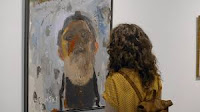
 
From another angle, The Artist’s Daughter seems to follow the playbook of Exit through the Gift Shop (2010), where the still mysterious artist Banksy puts out a documentary about a street artist and amateur filmmaker in Los Angeles, that may not be a documentary after all.  
 
The esthetic prowess of Linton’s gripping film – beautifully executed in terms of editing, cinematography and, yes, mise-en-scène - makes it a rich case study of the documentary's possibilities.
 

The Bankers Trial / Mishpat Habankaim (2022, Israel) Dir. Eliav Lilti
 
This Israeli documentary takes its cue from Michael Moore’s brand of first-person essays on political hot potatoes. The Bankers Trial was shot over several years, beginning in 2014, to capture the interactions and confrontations between Barak Cohen, a lawyer who defaults on a loan by the Leumi bank, and several bankers in Israel. A left-wing activist and a gadfly, Mr. Cohen wants to prove that banks in Israel are corrupt.  This performance activism culminates in a lawsuit by the bankers, ending up in a plea bargain where the only charge to Mr. Cohen and his group is violation of privacy.
 
The documentary is energetically shot, full of bells and whistles in all departments – stylistic choices that are more distracting than effective. The tone is jokey, and the candid camera approach feels too gimmicky at times.  Overall, a serious topic – the behavior of banking institutions in a capitalistic system – ends up getting a lightweight frivolous treatment.
 
 
The Camera of Doctor Morris (2022, Israel) Dir. Itamar Alcalay, Meital Zvieli. 74 min
 
The Camera of Doctor Morris
 is a triumph of found footage documentary filmmaking. The home movies taken by a Jewish British doctor who moved to Eilat, the Israeli port and resort town in the Negev desert, begin in the 1960s and record mundane events in his family life with an 8mm camera, without sound.  Like Alan Berliner’s investigations of his own family (Intimate StrangerNobody’s Business) this documentary shapes home movies – snippets of life – into a beautiful and dramatic portrait of a family immersed in a time and a place.  The narrative is organized mostly chronologically around the filmmakers’ interviews with the mother and three surviving children, now in their fifties, and heard in voiceover. Always behind the camera, the father is the absent figure on screen, though his strong personality is collated from the voiceover interviews. Also absent is the voice of the Down syndrome child, Aviva, who died at age 9. Her radiant presence provides the emotional and dramatic framework of the documentary. 
 
The home movies are beautifully edited, with interesting jumps in time, to capture the span from birth to adulthood once each child is introduced. The family scenes are also provided with realistic sound effects – à la They Shall Not Grow Old(2018). The film thus acquires a lively quality that makes it flow like a breeze. It closes with a brief cell phone recording by the son of the now elderly Dr. Morris, whose last words are a celebration of life. It is followed by a brief sequence where we see each family member on screen, in two photos, then and now.
 
The Camera of Doctor Morris is a delight to watch. Students of the documentary film will find much to learn about how film can shape bits and pieces of life taken by cameras, and now ubiquitous phones, into narratives of universal insight. 
 
 
Closed Circuit (2022, Israel) Dir. Tal Inbar. 55 min
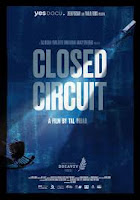
 
The punch of this above par Israeli documentary lies in its extraordinary use of security camera footage. [The adjective is not an exaggeration]. A terrorist act by two Palestinians, shooting at the patrons of a crowded restaurant in a Tel Aviv mall, on June 8, 2016, is literally “reconstructed” by skillfully editing footage from multiple camera sources.  Six years after the event, a handful of survivors are asked about the event and its traumatic aftermath, standing in front of the mall. These interviews of Israeli Jews and Arabs are illustrated exclusively by the security footage of cameras set up high up and edited following the chronology of the attack.  The film moves briskly thanks to a clever use of split screens, blurry transitions, repeated shots, all at the service of organizing a confusion of images into a narrative chockful with drama and suspense, contained by a time and space. The only reenactment – acknowledged in the credits – functions as the restrained climax of the story.
 
The use of surveillance video is not uncommon in documentaries today; the work of German experimental filmmaker Harun Farocki, for example, shows how images are used to inform, persuade and instruct. Interestingly here, images from these security cameras are drained of any partisan meaning vis-à-vis the Palestinian conflict, so that the documentary centers on the cost of a terror attack on people, regardless of their ethnic and religious origins. 
 
Written and directed by Tal Inbar, supported by a variety of public and private Israeli film organizations, and produced by Nancy Spielberg, Closed Circuit is a film to inspire documentary filmmakers on how to tell a story, packing a punch.
 

Egypt, A Love Song (2022, Israel/U.S.) Dir. Iris Zaki. 74 min
 
This excellent interactive documentary provides a solid lesson on how to turn home movie material into a fascinating probe of family relations, and cultural, political and historical identity issues over three generations.  Based on the family story of the director – the marriage of her Muslin and Jewish grandparents in Egypt the 1940s, and her own relationship with her father, their only son – the documentary skillfully weaves the strands of the personal (a riveting story) into a complicated tapestry of locales stretching over seventy years.  Made up on conversations between the writer/director Iris Zaki and her very articulate father Moshe in Israel and New York, the film deftly combines found footage, Egyptian film clips (the grandmother, Souad Zaki was a young singer and actress in 1940s Egypt), family photos, newsreels (updated à la Peter Jackson’s They Shall Not Grow Old) and reenactments of key family moments. Following the playbook of Alan Berliner’s Intimate Stranger (1991), Egypt, A Love Song has been supported by a variety of Israeli media organizations, including the Israeli Public Broadcasting Corp. 

 
40 Steps / 40 Tzeadim (2022, Israel) Dir. Gad Eisen, Manor Birman. 78 min.
 
Like Sansón and Me (2022), an outstanding film with explicit and implicit levels of meaning, 40 Steps pushes the boundary of documentary through an effective use of the tools of fiction storytelling.  40 Steps – one year in the life of two elementary schools in South Tel Aviv, one religious, the other secular – uses a vérité approach very successfully to reveal the larger contours of a conflict: the clashes between the directors of the schools represent larger issues in modern Israel – assimilation, the role of faith, gentrification, patriotism and a substantial etcetera.  Built as a structure of opposites at every level – especially through editing – the narrative unfolds so tidily that one wonders how much scenes – all of them offering drama and powerful insights - were staged for the camera.  Exactly along the lines of the original masterpiece that is Nanook of the North (1922). 
 
In this topnotch documentary, the principals obviously play themselves through speech and actions; the camera reveals the distinctive personalities of school children and their parents; and the interaction between the principals and the neighborhood activists are marked by real arguments for and against schooling immigrant and how best to preserve Jewish identity.  
 
After viewing the documentary, the impression is that 40 Steps stands in the intersection of documentary and fiction: not a docudrama (the closest fiction comes to documentary territory), and neither a standard documentary (where the traits of the genre are recognizable markers). The “creative treatment of actuality”, that elusive territory described by Grierson, is in full bloom in this first-rate documentary.

 
Generation 1.5 (2022, Israel) Dir. Roman Shumonov. 80 min

This excellent documentary gives an in-depth view of the impact of Jews emigrating to Israel when the Soviet Union collapsed in 1991.  It is done in the tradition of the expository documentary, aimed at informing, educating and entertaining its audience. Classic Grierson in its approach and execution.  There is a distinctive category of documentaries that may fly under the radar because their style and form don’t call attention to themselves, or their subject matter is not flashy, progressive or in the headlines.  Generation 1.5 is one of those works that accomplishes far more than what is initially announced.  In this case, an engaging, no holds-barred examination of the wave of immigrants that arrived as children and adolescents to a society in the antipodes of Soviet Russia. Two key talking heads – a sociologist and a public intellectual – provide the political and cultural context for the stories of several men and women in their late 20s now who relate to camera how they have lived the immigration experience at a personal and family level. It is, in the words of an insightful young woman, “a grueling, tough and complex tale of courage … not an heroic tale of courage”.  This is exactly what each one in this very articulate group brings to the documentary. Several emigrant parents are interviewed, sometimes in conversation with their now adult children, assessing the gains and losses in language and identity of the acculturation process. 

Generation 1.5 relies on a wealth nicely integrated archival materials, from poignant home movies in the Soviet Union to television footage since the 1990s, B-roll and images of present-day Israel. To commend is the first-rate montage of the implosion of the Soviet Union. 

Directed by established Israeli filmmaker Roman Shumunov (Back to Chernobyl, 2020) and cowritten with Raya Schuster, the 90-minute version seen here is either the first of three episodes, or a compilation of the 2022 documentary miniseries listed in IMDb. The series is distributed by the well-known Israeli outfit Go2Films so this cut could be for festival circulation. 
 
Universal in the way it reflects the emigration experience past and present, and spot on in capturing its impact plus a host of issues attached to migration and settlement, Generation 1.5 is a documentary not to be missed.

Homeboys (2022, Israel) Dir. Tamar Goren. 60 min
 
This lovely observational documentary captures the creative process of two young South-Sudanese teenagers deported from Israel to Uganda. Over two weeks, in the boarding school for refugees and with the help of an Israeli musician, they compose and record hip hop songs.  Low-key and insightful, Homeboys captures the joy, sadness and struggles of these two young musicians, and the other refugees in the boarding school, whose future looks bleak.  The film, however, celebrates the resilience of the human spirit, via music and the protagonists’innate optimism that things may get better.  Nicely edited and scored, the documentary makes the most of the verité approach.


The Partisan with the Leica Camera (2022, Israel) Dir. Ruth Walk. 55 min

This is a terrific historical documentary written and directed by Ruth Walk, a veteran Israeli filmmaker, that covers the life story of a Polish Jewish couple, who joined a partisan group in World War II. Similar stories have been told before, in oral histories, books and films, but this documentary offers a good case study on how old photos, insightful interviews and solid research become an "archeological dig" to reconstruct hitherto unknown lives that intersect with history.

Mundek Lukawiecki and Hannah Bern are remembered by their son, granddaughter and other people who knew them in the newly founded Israel, where they emigrated after the war. The record of their lives is mostly photos taken by Mundek, a professional photographer with a serviceable Leica camera, lovingly preserved by their son. The photos have been beautifully digitized, and used in interesting ways agains real life backgrounds, to provide a visual context to the war. Locations in Acre, Israel, and present-day Poland add to the vividness of the portraits. A larger picture also emerges sharply in the film, encompassing the Holocaust, the toll war takes on soldiers, the impact of the past in a family, and Israel as a place for a new beginning.

Deceivingly simple in its structure, elegantly executed (all the technical departments shine), The Partisan with the Leica Camera is another example of the quality documentaries supported by Israeli public and private cultural organizations.They speak of a level of excellence not easily found elsewhere.


Razzouk Tattoo / Yoresh Hakakuim (2022, Israel) Dir. Orit Ofir Ronell. 80 min
 
The director and team of this first-rate Israeli documentary pull quite a feat by shaping an oral history of sorts with a well-constructed open-ended mystery story. Razzouk Tattoo keeps you glued to the screen!
 
The Razzouk, a Christian family of Egyptian Coptic lineage living in Jerusalem’s old quarter, has been making tattoos on pilgrims visiting the holy sites, for more than five hundred years, as they note.  With care and insight, through interviews with articulate family members, the viewers are treated to the tattoo process (tastefully done, considering the bloody procedure) and also shown  the ancient seals used for their designs.  Those beautiful wooden seals – lovingly displayed, and also the subject of the book framing their story – are no longer an intact collection. Their scattering is at the core of the thriller, involving a family feud, investigated through photos and recollections but never resolved.  The musical score undergirding the mystery narrative provides a fascinating contrast to the camera slowly roaming through an ancient church, the biblical landscape outside of Jerusalem and the warm and tasteful family homes.  An eloquent study in contrasts – history and present day, the sacred and the profane, tradition and modernity – Razzouk Tatto shows how accurate is Ken Burns when he notes the huge magnificent spectrum in which documentary operates. 
 
Like many Israeli documentaries, this one has been supported by some of the key entities in the film landscape, like the Israel Cinema Project, The Rabinovich Foundations for the Arts, the Israel Film Council, the Israeli Ministry of Culture and Sport and the Doc Lab of the Tel Aviv Film Festival.


Documentary treasures: Four years of Israeli non-fiction films. Part 2: 2023

For the past several years I have been a pre-screener of documentaries features and shorts for the Social Impact Media Awards. SIMA is an online platform founded in 2012 by Daniela Kon, to curate, promote and distribute documentaries (https://simastudios.org).
 
What has stood out every year is the number and quality of documentaries made in Israel, produced with private and public funding. It is a thriving scene that deserves ample distribution and scholarly assessment.  Below I discuss a number of excellent titles, made between 2021 and 2024. I have included some of them in the Senses of Cinema World Poll of 2023 and 2024.  

I have organized them in five main categories, according to subject matter: 

1. The Jewish experience in Europe in the 1940s: The Address on the Wall (2022), Budapest Diaries (2024), 999: The Forgotten Girls (2023) and The Partisan with the Leica Camera.
 
2. Autobiographical documentaries. Lives in the first-person: The Artist’s Daughter, Oil on Canvas (2022), Egypt, A Love Song (2022). Empty Handed (2021), How to Say Silence (2021), M/Other (2024) and We Used to Sing (2021).
 
3. Israel: Cultural history. People in Israeli context: The Bankers Trial / Mishpat Habankaim (2022, Israel), The Camera of Doctor Morris (2022), Private Death (2021) and Razzouk Tattoo / Yoresh Hakakuim (2022).
 
4. Israel: Contemporary history and politics. Israel in the Middle East: Closed Circuit (2022), 
40 Steps / 40 Tzeadim (2022), Generation 1.5 (2022), Homeboys (2022), Mourning in Lod (2023) and #Schoolyard. An Untold Story (2021).
 
5. October 7, 2023. Chronology of a pogrom: We Will Dance Again (2024) and 06:30 (2024) 
 
All these films are good examples of Ken Burns’ counterintuitive insight about documentary: 
“To the general public, the word ‘documentary’ or ‘nonfiction film’ is a narrow band.  And we think that the feature film is this huge magnificent spectrum.  But if you really look at it, the feature film is      governed by a formula and laws of plot that  make it, I believe, the narrow band in the spectrum.   And it’s the documentary, it’s the nonfiction film, that has so many glorious possibilities.” (Liz Stubbs, Documentary Filmmakers Speak, 2002).
 
I have arranged them chronologically, from newer to older, transcribing the reviews I wrote at the time I screened them for the SIMA Award. Each year has its own blog entry.

2023


999: The Forgotten Girls 
(2023, U.S.) Dir. Heather Dune Macadam, Beatriz M. Calleja. 87 min . 
[Not an Israeli documentary. Included for subject matter and interviewees]
            
999: The Forgotten Girls is a topnotch documentary combining a decade of archival research in public and private repositories, with oral history-style interviews in a gripping narrative structure, to present the story of the first contingent of young unmarried Jewish women, sent from annexed Czechoslovakia to Auschwitz /Birkenau in 1942. Directed by historian Heather Dune Macadam, based on her book 999: The Extraordinary Young Women of the First Jewish Transport to Auschwitz (2020), the film is a superb example of how editing literally “builds” a documentary from diverse materials: photos and home movies, prisoner art, commissioned drawings and brief excerpts from other films. It is a powerful audiovisual portrait of grit, courage, optimism and solidarity, about women who recount their lives between 1942 and 1945, without specific footage, about their camp survival experience.  
 
The interviews with a handful of survivors, began in 2012, are organized as a chronicle with multiple threads, firmly held by narrator Ramita Navai, that mixes the vivid recollection of women now in their 90s, with occasional dramatizations. The result is a strong narrative and engaging characters recounting “the horror, the horror” with emotional restrain and sensibility, and a tragic ending for most of the 999 contingent rescued from historical oblivion. The 999 names whose are movingly displayed in a recurring background. The point of view keeps the story centered on the personal and the feminine, so it’s no surprise that the documentary wraps up the individual stories with tender accounts of lives built with beauty and goodness after the ordeal was over.  The closeup of the arm of one of them, with a camp number visibly tattooed, now old, caressing a baby encapsulates the profound humanity of the project.
 
The director relied on skillful editor Beatriz M. Calleja, credited as co-director, and the decades long expertise of PBS and HBO Susan Lacy. The original soundtrack and songs give the documentary its beautiful spiritual tone.  Like other historical documentaries grounded on personal stories, including Budapest DiariesArmenians, The Hidden Grandmothers and My Stolen Planet, 999: The Forgotten Girls is a case study on how to blend disparate materials in a coherent story.
 
 
Mourning in Lod (2023, Israel) Dir. Hilla Medalia. 72 min
            
With a remarkable sense of story structure and an open end that refuses a neat resolution to the interwoven stories of Israeli Jews and Arabs in a town near Tel Aviv, Hilla Medalia makes another documentary on a knotty subject.  It is a riveting film combining powerful, heartfelt interviews by family members who lost dear ones or gained a life thanks to a transplant from one of them; archival footage (from television news, cellphones, security cameras) and dramatic scenes staged for the camera, like the visit paid by the Arab woman who received the transplant to the Jewish family grieving for their dead father. 
 
The director and her collaborators plunge into a minefield but come out delivering a striking documentary about mourning, the difficulty but not the impossibility of dialogue, and the complicated status of ethnic and religious relations in Israel today.  The situation in the country now (I’m writing these comments almost a month after the massacre of Israelis by a Muslim terrorist organization) is given not a bird’s-eye-view of complex politics but an understanding of what it means for Arabs and Jews to live as neighbors in one town.
Mourning in Lod does not favor a point of view over others, neither offers praise or condemnation, or espouses “what-aboutism”. It is an honest and raw look from all angles, giving space to viewers to reach their own conclusions, with an above par use of the documentary strategies.  Bombarded like we are by ideologies and propaganda, Mourning in Lod offers a sober look not to be missed. 


Documentary treasures: Four years of Israeli non-fiction films. Part 1: 2024


For the past several years I have been a pre-screener of documentaries features and shorts for the Social Impact Media Awards. SIMA is an online platform founded in 2012 by Daniela Kon, to curate, promote and distribute documentaries (https://simastudios.org).
 
What has stood out every year is the number and quality of documentaries made in Israel, produced with private and public funding. It is a thriving scene that deserves ample distribution and scholarly assessment.  Below I discuss a number of excellent titles, made between 2021 and 2024. I have included some of them in the Senses of Cinema World Poll of 2023 and 2024.  

I have organized them in five main categories, according to subject matter: 

1. The Jewish experience in Europe in the 1940s: The Address on the Wall (2022), Budapest Diaries (2024), 999: The Forgotten Girls (2023) and The Partisan with the Leica Camera.
 
2. Autobiographical documentaries. Lives in the first-person: The Artist’s Daughter, Oil on Canvas (2022), Egypt, A Love Song (2022). Empty Handed (2021), How to Say Silence (2021), M/Other (2024) and We Used to Sing (2021).
 
3. Israel: Cultural history. People in Israeli context: The Bankers Trial / Mishpat Habankaim (2022, Israel), The Camera of Doctor Morris (2022), Private Death (2021) and Razzouk Tattoo / Yoresh Hakakuim (2022).
 
4. Israel: Contemporary history and politics. Israel in the Middle East: Closed Circuit (2022), 
40 Steps / 40 Tzeadim (2022), Generation 1.5 (2022), Homeboys (2022), Mourning in Lod (2023) and #Schoolyard. An Untold Story (2021).
 
5. October 7, 2023. Chronology of a pogrom: We Will Dance Again (2024) and 06:30 (2024) 
 
All these films are good examples of Ken Burns’ counterintuitive insight about documentary: 
“To the general public, the word ‘documentary’ or ‘nonfiction film’ is a narrow band.  And we think that the feature film is this huge magnificent spectrum.  But if you really look at it, the feature film is  governed by a formula and laws of plot that  make it, I believe, the narrow band in the spectrum.   And it’s the documentary, it’s the nonfiction film, that has so many glorious possibilities.” (Liz Stubbs, Documentary Filmmakers Speak, 2002).
 
I have arranged them chronologically, from newer to older, transcribing the reviews I wrote at the time I screened them for the SIMA Award. Each year has its own blog entry.
 
2024
 
Budapest Diaries (2024, Israel) Written and directed by Shay Fogelman. 60 min                
            
An above par expository documentary in the excellent tradition of contemporary Israeli cinema dealing with historical and political matters, Budapest Stories starts with a simple and elegant conceit: the last year of World War II in Budapest as captured by diaries kept by Hungarian Jews and Catholics, ordinary people who give a vivid account, day by day, month by month, both tragic and mundane, of the brutal experience. Rescued from attics and trashcans many decades later, these diaries are phenomenally illustrated by a wealth of archival materials from the period. Much of it will not be familiar to general audiences and is so seamlessly cut to the interviews of Hungarian and Israeli historians and family descendants, that these accounts, nicely interwoven and chronologically arranged with photos identifying each writer, conjure up a world remembered in black-and-white. 
 
Journalist and documentary filmmaker Shay Fogelman and a group of solid collaborators put together a remarkable film, that keeps a tight rein on emotions, a contrast with the haunting impact of Ann Frank’s diary recordings on readers and audiences.  There is no overall narrator to shape the arc of the stories, unlike Ken Burns in the recent U.S. and the Holocaust (2022). The diary writers and their children and grandchildren provide a rich context, showing how the experience of ordinary people give insights into a historical period.  In this sense Budapest Stories looks at the Shoah as it unfolded in Hungary at the tail end of World War II, with accuracy and detail.  And since the October 7, 2023, attack of a terrorist organization against Jews, with genocidal intent, Budapest Stories gains a poignant relevance.

 
M/Other (2024, Israel) Dir. Iris Zaki. 18 min
 
Israeli filmmaker Iris Zaki recurs to a simple narrative trick to make three mothers have a one-on-one conversation with their daughters about why they don’t want to have children: she switches the pairs. What ensues is a 15-minute candid and honest exchange of opposing views between an older, conservative generation and a younger secular and progressive progeny. There is no dramatic construction, climax or epiphany in this first-person documentary, just the contours of two camps at war about the role of women, family, and tradition (all key topics in contemporary Israel). Zaki bets on the dialogues, which flow smoothly and politely, with insights here and there that could have benefitted from a longer format. In passing, two of the daughters confess to abortion as a means to preserve control.
 
Two feature films of Iris Zaki have been excellent SIMA contenders in previous years, Egypt, A Love Song (2022) and Unsettling (2018). They have in common with this short, included in the New York Times Op-Doc series, an emphasis on capturing dialogue in a way that builds up an often fractious or contested world, involving life, history and politics in Israel today.  In this sense, M/Other – a clever and revealing pun – is a building block in portraying modern Israel, attuned to issues of generational change, feminism and agency. This short opens interesting vistas and hopefully a larger project can be developed from these interviews/conversations about clear-eyed women. 
            
 
We Will Dance Again (2024, Israel) Dir. Yariv Mozer. 89 min
            
This Israeli documentary is the Night and Fog (1956) of our times. Using black-and-white archival materials about the methodical destruction of the European Jews by the Nazi regime, bookended with color footage of the extermination camps a decade later,  Night and Fog is a large scale record of the Shoah, that still impacts powerfully.  Almost seven decades later, We Will Dance Again provides a brutal account of October 7, 2023, the largest massacres of Jews since the Holocaust.  It chronicles of the Hamas terrorist attack to the Nova Music Festival, combining harrowing cellphone footage from young Israelis attending the concert, with the terrorists’ body cameras, and security cameras. What makes this film a remarkable document – above and beyond its technical achievements in editing, cinematography, story structure and sound - is that it captures in real time, from multiple witnesses, what it was to find oneself, in a split second, on a journey through hell.  Following the narrative strategy of the observational documentary, the story unfolds in front of us as if we don’t know where it will take us, creating an increasingly inescapable and immersive space for “the horror, the horror”.  

We are literally made to share first the incomprehension, then the incredulity and finally the terror of the slaughter.  The interviews with survivors are similar in quality and impact to 06:30, another powerful Israeli entry on October 7. But what makes them stand out here is that those interviewed become characters in the documentary – with a background story illustrated by comments and photos of a happier time.  They all participate in a chronicle of a death announced, with writer/director Yariv Mozer functioning like Homer in the Iliad, giving each one individuality and the full measure of a life. Acts of heroism recounted here are shown in cell video, the most haunting perhaps is the now well-known case of the young man who kept throwing back to Hamas the grenades lobbed at group in a shelter. 
 
We Will Dance Again is both a testament to the grit of the Israeli nation and a powerful document of what film can do to capture and show the truth.  
 
 
06:30 (2024, Israel) Dir. Alon Daniel. 64 min
            
Made for Israeli public television, this remarkable documentary tackles the terrorist attack of October 7, 2023. It is an hour-long chronicle of the brutal event recounted in detail by survivors from the music festival and the kibbutzim, including a hostage and a paramedic. A precise timeline of hours and minutes is the framework containing the recollections of the witnesses, single or in pairs, who provide vivid memories and gut reactions about their brush with death and hell. The settings for the interviews are their familiar environments, with wounds visible to the audience, a visual contrast to the emotional restraint sought by the filmmakers in the witnesses' delivery tone.
 
Written and directed by Alon Daniel, this above par documentary uses miniatures and Lego-style animation to illustrate the harrowing stories, eschewing the use of narrator and jarring archival footage. It is a decision that pays off esthetically and emotionally, since it unifies the multiple voices into a continuum, that emphasizes the human and eschews on-your-face politics and ideology. It’s a bet that brings the documentary above a run-of-the mill television documentary.
 
06:30
, named after the time the attacks began, provides an interesting case study on how to present what Joseph Conrad called “the horror, the horror”, via images and sounds.  In its esthetic choices, it is reminiscent of the SIMA 2022 entry Eternal Spring, that reconstructs through animation the central event for which there is no footage. It shares with the 2025 SIMA entry, Budapest Diaries, a foregrounding of the personal and human, over politics, a decision that paradoxically – in both documentaries – brings out the contours of the latter very vividly.
 

Friday, February 21, 2025

Four documentaries at the 75th Berlinale

The documentaries spanning all sections of the Berlinale have always been interesting and wide ranging.  One gets a sense of how the “creative treatment of actuality”, in John Grierson’s always handy description, has fared from one year to another.  The flexibility of the genre is palpable in the four documentaries I saw these past days: The first-person historical compilation All I Had Was Nothingness; two observational documentaries about war-torn Ukraine, Timestampand Time to the Target; and an American essay film, Evidence.
 
In 1985 I had the opportunity to view the complete Shoah – the nine-and-a-half-hour oral history of the Holocaust made over 12 years by Claude Lanzmann. It was an experience I never forgot, not the least because the screening over several days took place in the very city where the logistics of the hecatomb were planned and implemented. Also striking was that Shoah did not show any historical footage, à la Night and Fog (1956); it only featured interviews with survivors and perpetrators, and B-roll, some of which was obtained with hidden cameras. Or, using deception, as Lanzmann wryly described in a Berlinale appearance in the 2010s, for the screening of The Last of the Unjust.

For Shoah’s 40the anniversary, the festival premiered in Berlinale Special Je n’avais que le néant: Shoah par Lanzmann / All I Had Was Nothingness. Guillaume Ribaud, a French photographer whose interest in history led to writing books on dark chapters of the 20th century, was given access to Lanzmann’s archive by his widow Dominique, who is also one of the two producers. Ribot reviewed over 220 hours of outtakes and materials not used in Shoah and his last Holocaust project The Four Sisters (2018). The editing is organized around Lanzmann’s 2009 memoir Le lièvre de Patagonie (The Patagonian Hare, trans. 2012), which Ribot reads as a first-person voiceover.  The narration cleverly works at two levels: it is a referential text about the complicated research over a decade to find the interviewees; but it also comments about the challenges of a project whose point of departure was the “All I had was nothingness” of the title, coming straight from Lanzmann.  The interplay between the expository mode and the self-referential approach to its conditions of production and ethical dilemmas makes All I Had Was Nothingness a superb coda to Shoah.  The documentary also unfolds as road movie of sorts, since much of the material selected is of Lanzmann driving to interview his subjects, talking to the camera about the peculiar nature of this work, the presentation of “the horror, the horror”.   

Screened in the Forum Time to the Target and Timestamp, written and directed by Vitaly Mansky and Kateryna Gornostai are complementary takes on the impact of the 3-year war Ukraine is fighting against Russia. In both films the approach is cinéma verité, never easy to implement, requiring time, timing, patience and more than a modicum of luck. Mansky crafts a 3-hour love letter to Lviv, his hometown, relatively far from the battlefront. With a very small team and a camera both inquisitive and respectful, with an eye for details, 

Time to the Target
 is a mosaic of people, old and young, military and civilians, maimed soldiers and priests, in a wide range of situations captured over a year. Death, destructions and funerals are regularly brought from the background to provide narrative continuity and a visual and sound frame. Interviews are few and far between, well selected and edited to seize the fundamentals of a permanent state of war and its impact on ordinary people.  A profound sense of beauty - physical and spiritual - permeates the film, creating an immersive experience for the non-Ukrainian audience, that generates empathy.  In this sense, Time to the Target functions as a strategy of truth, showing the world the resilience and determination of a beleaguered city, a synecdoche for the whole country. 
 
Timestamp
 has a similar impetus, but its focus is one year in the life of several schools far and close to the battlefront. The vérité approach serves it well, and it shares with Time to the Target a similar sensibility to beauty in its physical and spiritual dimensions.  Here, the teachers as beacons of strength and normality ground the story, fulfilling a patriotic mission, the preservation of the nation’s history and culture. 
 
Viewing these two films, I was reminded of another Ukrainian documentary, the semi-experimental Rule of Two Walls(2024), directed by the Ukrainian-American David Gutnik. It captures the experience of war as lived and thought through by several artists precisely in Lviv and Kviv.  One recognizes, a patriotic sensibility looking to consolidate a national identity threatened by an imperial invader.
 
Finally, my two cents about Evidence, a well-crafted example of the essay film, written and directed by Lee Anne Schmitt, a filmmaker based in Altadena, and probably affected by the devastating Easton fire of a month ago.    
 
The essay film has gained wide recognition as a specific, if eminently plastic, mode of film practice. It is a hybrid that is neither “purely fiction, nor documentary, nor art film, but incorporates aspects of all these modes”, as noted by Nora Alter in The Essay Film After Fact and Fiction (2018, p.4). From a purely film history angle, Evidence is designed as a piece of agit-prop, in the mold of the Soviet Russian filmmakers of the 1920s.
 
Schmitt’s subject is the role played by the John M. Olin Foundation, set up by the chemical company Olin Corporation, in the financing of conservative institutions and programs in the U.S.  The director builds the air-tight narrative characteristic of the agit-prop, by laying a first-person narrator over images purposefully unrelated to the topic. This editing strategy is visually arresting, in the style of Sergei Eisenstein and Dziga Vertov, but the downside is that it preaches to the choir.  If the counterpoint to Evidence had been a documentary about the Ford or the Soros foundations, leaders in funding progressive causes, the effect would have been the same: another choir, similar impact. Lee Anne Schmitt’s documentary is exhibit one that ideologically-driven projects – whatever its politics – face limitations.
 

Thursday, February 20, 2025

The 75th Berlinale - February 13 - 23, 2025

Thanks to an invitation from filmmaker Manuel Antín, then the director of the Argentine Film Institute, who had appointed me to the federal film rating commission, I attended the Berlinale for the first time in February 1985. Berlin was still divided, and the festival was an instrument of West Germany’s soft power in a Cold War that had no end in sight: the Berlin Wall was a stark, brutal reality. I saw it for the first time from a platform in West Berlin.  It was the site, though not the filming location, where Wim Wender would set Der Himmel über Berlin / Wings of Desire (1987) two years later, in present day Potsdamer Platz, then a mined no-man’s land separating the outer and inner walls of the Mauer.

Long introduction to note that I have been coming to the festival as accredited press since its 35th edition until today, the 75th.   I missed a handful of times. If it were not for the hundreds of films from all over the world seen over more than three decades, my teaching would have been provincial.

Every year it is the same viewing routine: each day, three films in the Competition, and one or two in the other sections, plus press conferences with filmmakers in attendance. Film heaven.


The lights go off in the theater, the screening begins, and I am a tabula rasa ready to be won over by the magic of the movies. It is the best crash course in film esthetics that I can recommend, to actually see how film techniques work and how the dialogue with life unfolds in the dark (paraphrasing Scorsese’s 2013 essay “Persisting Vision: Reading the Language of Cinema”, a staple in all my classes).
 
It never fails that very soon the films begin a conversation with one another, or engage genres, auteurs, national cinemas, and the best case of all, with film history. 
 
One thread in half the 19 titles in the Competition is a focus on the nature and function of womanhood, as it relates to the protagonists themselves, their duties and desires, but also to their role as wives and mothers.  
 
In some cases, it is literally a case of paging Dr. Freud. Based on a novel, the British Hot Milk, about a domineering mother, afflicted by a mysterious illness(Fiona Shaw), and her caregiver daughter (Emma Mackey), written and directed by Rebecca Lenkiewicz, traces the self-awareness process of the latter, through a trip from Ireland to Spain. The changes are triggered by a lesbian attraction to a bisexual beauty (Vicky Krieps). The climax is a showdown between mother and daughter that leaves the audience in the dark (literally a black screen is the final image) about the success or failure of their separation. 
 
In the Swiss - German Mother’s Baby, Johanna Moder explores the increasing hysteria of Julia (Marie Leuenberger), a young orchestra conductor who conceives a child via IVF and is unable to take care of the baby (she forgets to feed him, drops him to the floor), to the alarm of her loving husband (Hans Löw).  Mother’s Baby systematically manipulates the relatable fears of any new mother into a horror story from the perspective of a protagonist becoming increasingly paranoid. The turning point in this descent to madness is Julia’s belief that the baby has been switched at birth; and the climax, the fantasy that it died at birth, is stored in a refrigerator and needs rescue. The last image is the ultimate nightmare: Julia carries the dead baby in her arms. That she is an unreliable narrator does not soften the emotional impact of this unflinching description of post-partum depression carried to its extreme.
 
If I Had Legs, I’d Kick You
, a U.S. drama written and directed by Mary Bronstein, effectively mixes the conventions of horror with melodrama. It is a psychological thrill ride about a therapist (Rose Byrne) whose husband is away on a business. She is taking care of their young daughter (heard but not shown on camera) whose mysterious illness may kill her. A dizzying crescendo of complications, including the testy confrontations with a fellow therapist, played with relish by Conan O’Brien, lead to another hard-hitting climax, but a split-second intervention of providence makes the case for motherhood as a redemptive force. 


Interestingly, two small scale family dramas – the German Was Marielle weiss/ What Marielle Knows, written and directed by Frédéric Hambalek, and the Argentine El mensaje / The Message, co-written and directed by Iván Fund, are stories about young girls whose mysterious spiritual powers impact their families in unforeseen ways.  

What Marielle Knows is based on the conceit that as a result of a punch, the daughter (newcomer Laeni Geiseler) of sophisticated bourgeois parents can “see” and “hear” what they are doing at all times (excellent the renowned Julia Jentsch and Felix Kramer). Briskly plotted and edited, the film asks the question: is transparency in a marriage 100% desirable, or should there be a space for the “noble lie”?  The film works partially as a morality tale with an edifying ending, and also as the portrait of a couple functioning in a sterile environment, nicely conveyed by sets and locations.  


In the Argentine El mensaje, directed by Iván Fund, the conceit is that 12-year-old Anika (Anika Bootz, also a newcomer) can speak to animals and her two guardians (veteran actors Mara Bestelli and Marcelo Subiotto), travelling in a modest motor home through provincial towns, set up a business delivering messages to owners about their dead or missing pets. Shot in exquisite black and white, with a lovely jazz score, the film provides no context, avoids social commentary and eschews an ethnographic approach. It slowly reveals who these people are, keeping the question, "Are they con artists?", unsolved until the revealing last line.  This road movie is in conversation with Fellini’s La Strada (1954), not only in the trope of the journey – geographical and symbolic – but also for the role played by love and grace in the road of life.
 
The Brazilian entry O último azul / The Blue Trail, co-written and directed by Gabriel Mascaro, is also a road movie, and, remarkably, one that sidesteps the legacy of Cinema Novo.  Unlike Walter Salles’ Central Station (1998), rooted in an understanding of Brazil shaped by that legacy, O último azul’s point of departure is a science fiction premise:  the government (slight jabs at the Bolsonaro administration of a few years ago) confines the elderly in a housing colony to save economic resources. In her late seventies, Tereza (Denise Weinberg), a resilient factory worker in the Amazonia, is forced to retire and ordered to check into the facility, far from family and friends. 
Her final wish is to fly in an airplane, so she defies the government edict and flees.

What follows are picaresque self-contained episodes, unfolding along the Amazon and its tributaries, providing a mosaic of the Brazilian society. At the end, Tereza meets a free-spirited preacher her age (Cuban actress Miriam Socarrás), the owner of a boat, who knows how to beat the system, and invites her to share the adventure. It’s a fairy-tale happy ending, a utopian solution for two feisty old women who have lost none of the zest for living. In old age ... 
carpe diem.


In a flight of historical imagination, I can picture Sigmund Freud at the Berlinale Palast this festival, scratching his forehead, still wondering: "Was will das Weib?"


Saturday, February 8, 2025

Palmas (2024): a documentary short about Los Angeles

The rewards of toiling in the teaching trenches for many years sometimes appear in unexpected ways. Such was the email from Aric Lopez, a CSUN student who took two of my classes during the fateful pandemic season. I wrote a letter of recommendation for USC in Fall 2021, but lost track of his endeavors.   

Fast forward to this email from December 13, 2024: "I feel that this film might resonate with you, as I took inspiration from some of the filmmakers you focused on in class such as Agnès Varda and Patricia Cardoso. I'm very proud of it, and I think the influence of attending a school like CSUN helped shape this documentary and its particular lens on Los Angeles. Lastly, you wrote my letter of recommendation to USC, so I hope this film is evidence that I have fulfilled the promise of your recommendation".

I wrote a review of his beautiful short Palmas, as if I had pre-screened it for a festival. 
Here it is, hoping that this work of love finds an audience.

"USC graduate film student Aric Lopez has made a very polished autobiographical essay using palm trees, non-native plants in Southern California, to interrogate his own life and roots in Los Angeles. 
 
It is an impressive film in its technical aspects, notably camera work, sound design and music, showcasing extensive research in local archives.  It is divided in three blocks by simple, elegant and expressive black and white drawings: “The Transplant Tree”, “The Three Communities” and “Native Angelenos”.
 
Interestingly, Palmas struggles to overcome a storytelling dilemma, the result, I think, of a strong drive to make a longer film, wishing to encompass other subjects to bring a larger picture of life in Los Angeles.  The palm tree is a metaphor for the director’s self in the first seven minutes, with footage of various species intercut with interviews about the history and meaning of the botanically named "arecaceae",  integral to the familiar and mythical landscape of the city. A story of invasion, if I may.

The short then takes takes a surprising turn into chapters of LA history – the building of Dodger Stadium and the Spanish missions  – to connect this foreign species with the natives and Hispanics, seen as firmly implanted in its geography. These communities are the natives displaced by waves of English speakers. 

Thus, the native/non-native equation described in the first block is upended in the second and third, where the resilience of Indians and Spanish-speakers is as tenacious as the acclimated and tough palm trees. The displacement of the Mexican Americans of Chavez Ravine and Gabrieleño-Tongva Indian tribe in the San Gabriel Mission, as told to the camera by their modern-day descendants and archival materials, is the subject of the longer documentary pushing to be born from Aric Lopez' creative vision.
 
The writer/director’s rootedness in Los Angeles, described as the interplay between the outside and the inside, with the palm tree as a metaphor for both, is reaffirmed at the end of the film. Closing with a lovely shot of three tall palm trees blowing against a blue sky, the writer/director softly concludes that he now understands his rootedness in the hidden history of displaced Angelenos. The paradox of Los Angeles has been captured in a poetic manner".


Friday, February 7, 2025

Documentary gems: The 2024 World Poll of "Senses of Cinema"

I have been reviewing documentary submissions for the Social Impact Media Awards for a few years. It is an annual competition run by the non-profit organization SIMA Studios that also curates documentaries and media projects through its online platform.

Here are five documentaries, richly deserving promotion and a worldwide audience. The January 2025 issue of  
"Senses of Cinema", number 112, published my selection.


                       Black Snow 
                    Dir. Alina Simone, U.S., 2024

A profile of the Russian eco-activist Natalia Zubkova, begun in 2019. Black Snow more than meets the challenges of the observational mode about finding story form: it is constructed with bits and parts, including home movies, Zubkova’s own journalistic footage, archival materials and elegant animation. The two narrative blocks are skillfully integrated: first comes the work of a citizen journalist, recording the damage of the open-pit coal mines in her Siberian hometown in a successful blog. Then, the viral impact of her denunciations that leads to her exile in Georgia.

Black Snow is staged for the camera – Flaherty style – to make the key intellectual and dramatic points effectively, like its opening scene with Zubkova recording what she thinks may be her last blog, a chronicle of a death announced. It has many similarities with the remarkable Navalny (Daniel Roher, 2022), another political film aiming at the larger picture of Putin’s Russia from the testimony of one courageous individual.  
 
                    Emergent City 
                    Dir. Kelly Anderson, Jay Arthur Sterrenberg, U.S., 2024

Made over a decade by veteran filmmakers Kelly Anderson and Jay Arthur Sterrenberg, Emergent City is a triumph of observational documentary. It captures the conflict in the Sunset Park riverfront of Brooklyn between its traditional working-class community and the developers of the Industry City complex of decayed industrial buildings.

An X-ray of the centrifugal forces at play triggered by gentrification, the film assembles an extraordinarily detailed world of characters and situations, carefully edited to build a powerful narrative that never loses sight of what makes a neighborhood alive.
 
                    I Hope This Helps! 
                    Dir. Daniel Freed, U.S., 2024

I Hope This Helps! is a 50-minute clever gimmick disguised as a documentary, à la Exit Through the Giftshop (Banksy, 2010). Entertaining and sleek, the film demurely asks if A.I. is good or bad for humans. It does so with a fun story about its writer/director Daniel Freed “building” a relationship with the A.I. program Bard to make this documentary. 

The comedy springs from the stilted answers the program provides, rendered as a fuzzy screen creature with a British-accented female voice. This one-joke film is predicated on – but coyly avoiding – the non-sentient nature of artificial intelligence.  It milks the gag cleverly, expanding on its absurd “reasoning” and structural incapacity to understand context and nuances.  
 
                    Rule of Two Walls 
                    Dir. David Gutnik, Ukraine, 2024

Combining a semi-experimental poetic format with interviews to show the devastation of war on the home front, like the German/Armenian Landschaft (Daniel Kötter, 2023), Rule of Two Walls is an intelligent documentary about the experience of war as lived and thought through by several artists in Kyiv and Lviv, shot between February and November of 2022, the first months of the Russian invasion of Ukraine. 

It works remarkably well as a war record (images of corpses are particularly haunting, à la Night and Fog); a survey of ideas about national, cultural and religious identity, as culled from insights provided by the artists interviewed; a reflection on the art of documentary; and, ultimately, a celebration of the human spirit.

The self-reflexive aspect of Rule of Two Walls – the strategy to be used when being bombed – is particularly to guide a filmmaker in the craft of filming and editing situations of upheaval. It movingly records the grit and endurance of a proud people and their culture refusing to surrender to a neighbour’s imperial designs.
 
                    The Sixth 
                    Dir. Andrea Nix Fine, Sean Fine, U.S., 2024

The Sixth
 is a gripping record of January 6, 2021, the day a mob entered the Capitol building by violent means, disrupting the electoral certification process of president-elect Joe Biden. It weaves interviews with two policemen, their chief, a House representative, a photographer covering the scene, and an administrative employee. Eloquently and with emotional restraint, in polished interviews, these six witnesses meticulously recount the day in chronological order. 

The documentary deftly combines footage from bodycams, cell phones, security cameras and television news, strictly from the point of view of those defending the Capitol from the assault.

The Sixth is a chronicle, not an explanation, of the fateful January 6. It interestingly eschews a voiceover narrator, thus providing an unmediated immersive experience. A few reenactments make it flow organically. A recurring diagram of the Capitol and its environs shows with dots where the interviewees were during specific incidents, so that the viewers can see in real time what the assault on the Bastille must have looked like in 1789.  
 
                    We Will Dance Again 
                    Dir. Yariv Mozer, Israel, 2024

We Will Dance Again
 is the Nuit et brouillard (Night and Fog, Alain Resnais, 1956) of our times. It provides a brutal account of October 7, 2023, the largest massacre of Jews since the Holocaust. Chronicling the Hamas terrorist attack on the Nova Music Festival, it combines harrowing cellphone footage from young Israelis attending the concert with the terrorists’ bodycams and security cameras.
 
This remarkable documentary captures in real time, from multiple witnesses, what it was to find oneself in a split second on a journey through hell. The audience is literally made to share first the incomprehension, then the incredulity and finally the terror of the slaughter. 
 
Those interviewed become fully-fleshed characters in the documentary – with a background story illustrated by comments and photos of a happier time. It is a counterpoint to that day’s videos, the most haunting perhaps is the now well-known of the young man who kept throwing back to Hamas the grenades lobbed at his group in a shelter. Like Homer in the Iliad, writer/director Yariv Mozer gives each one individuality and the full measure of a life.