Sunday, October 30, 2022

The Spanish "Drácula" (1931): Horror, Hispanic style

I wrote these Program Notes for the screening of Drácula (1931), at the Billy Wilder Theater, Hammer Museum, Los Angeles, October 29, 2022.


This is the second joint program between the Latin American Cinemateca of Los Angeles and the UCLA Film and Television Archive.  Once more this collaboration is devoted to Spanish-language cinema made in Los Angeles in the 1930s.  These two films bookend the decade: Verbena trágica (1938), featured in  May 2021, was an independent production attempting to capitalize on Spanish-language audiences in the US and Latin America once the sound technology was well in place by the mid-30s. Drácula (1931), on the other side, was made by a Hollywood studio figuring out how to keep the large Hispanic market, when the coming of sound disrupted the business model, and the films made in Mexico, Argentina and Spain seemed to challenge Hollywood’s supremacy. (1)


Also, like Verbena trágica, the Library of Congress selected Drácula for preservation in the National Film Registry, finding it “culturally, historically, or esthetically significant”.


Drácula is an interesting example how film esthetics (the horror genre), an innovation (sound) and the business of the Dream Factory intersect in cinema history.  


Based on the epistolary 1897 novel by Bram Stoker, but rerouted through its stage play of 1924, revised in 1927, Dráculawas produced by Universal Studios, as a Spanish-language version of the English original. The studio strategy, in the midst of the Depression, was to shift to pictures less expensive than spectacular productions like All Quiet on the Western Front (1930). Dracula and Frankenstein, made and released in 1931, directed by Tod Browning and James Whale, were the first titles to establish the conventions and visuals of the horror film in the sound era. They were both box-office hits and made Universal Studios synonymous with this new genre.  


The wonderful documentary by Kevin Brownlow, Universal Horror (1998) is a trip through the highlights of these films, featuring the parallel stories of Dracula and Drácula. Well worth watching as a companion piece to this screening. (2)


The Spanish version was shot between October and November 1930, using the same sets of the English version, starring Hungarian-born Bela Lugosi (the vampire reference par excellence) as Count Dracula and Helen Chandler as Mina, the virginal English woman who becomes his victim.


In an interesting choice of casting by producer Paul Kohner, in charge of the foreign-version productions at Universal, a very young Mexican actress, Lupita Tovar became Mina’s Hispanic version, Eva, equally virginal looking, but costumed in sexy outfits.  In her charming memoir, published in 2011, Lupita Tovar devotes a chapter to her second film for Universal, after establishing herself in La voluntad del muerto (1930), the Spanish version of The Cat Creeps


“George Melford was hired to direct, with a cast including Carlos Villarías, Pablo Álvarez Rubio, Barry Norton (from Argentina), Carmen Guerrero, Manuel Arbó, Eduardo Arozamena and me. We used the same sets and the same script translated into Spanish, but a completely different crew led by cameramen George Robinson. Paul [Kohner] was the supervising producer of both films but his heart was with our version.  We shot at night, while the English-speaking cast filmed during the day. The American version had started two weeks earlier so we were able to use the sets they had already finished with.


Only Carlos Villarías, who played Count Drácula, was allowed to see dailies. He was encouraged to be as “Lugosi-like” as possible. The rest of the us were on our own. Paul wanted our film to be better than the English-language version. George Robinson, our lighting cameraman, lit our sets with creepy shadows and added cobwebs everywhere. My nightgown was much sexier than the one Helen Chandler were and, perhaps because we were filming at night, our actors seemed even more menacing.


We had tremendous respect for our director George Melford. He was like a god to us. But there was some tension on the set because we knew we were competing with the American Dracula; we felt pressure to perform better than them. We were trying so hard. We finished our film in only twenty-two nights; the American version took seven weeks." (3)


Pancho Kohner - the son of Lupita Tovar and Paul Kohner, who were married in 1932 - recounted how 
Drácula, unseen for decades and hence barely warranting a mention in film history books, was found in a New Jersey warehouse in the 1970s.  The American Film Institute made a print for a Universal Studios retrospective at the Museum of Modern Art. But the nitrate negative had begun to decompose and was incomplete. The only other existing print was found at the Cinemateca de Cuba, and after some maneuvering by the UCLA Film and Television Archive, navigating Cold War era restrictions, a new negative was struck in 1991. Drácula “resuscitated” in Havana, as the program notes for a screening of the restored film in Cuba cheekily noted. And the film has been available since, as a bonus material for the DVD and BluRay releases of the original Dracula. (4)


Those interested in the ramifications of Dracula into the Hispanic    imagination will enjoy watching, or reviewing in this context, the intriguing variations woven into the blood-thirsty count by Guillermo del Toro in his debut film Cronos (1993): the erotic angle is erased and a Catholic sense of sacrifice and redemption underpins the Mexican vampire’s last and fatal decision.  A more orthodox take on the bloodthirsty vampire is the classic mid-century Mexican horror El vampiro (1957), directed by Fernando Méndez.


One final note, the grandchildren of Lupita Tovar and Paul Kohner, the filmmakers Chris and Paul Weitz (About a Boy, A Better LifeFatherhood, Operation Finale) are writing and directing Spanish Dracula, what else but the love story of their grandparents during the filming of the Spanish version. (5)


Notes


(1) As noted by film historian Lisa Jarvinen, 30% of Hollywood trade was with Latin America. The Rise of Spanish-Language Filmmaking: Out from Hollywood's Shadow, 1929-1939 (2012).

   For a recent survey of these films aimed at the Hispanic market, see Juan B. Heinink and Robert G. Dickson, “Cita en Hollywood”, in Hollywood Goes Latin. Spanish-language Cinema in Los Angeles, edited by María Elena de las Carreras and Jan-Christopher Horak (2019).


(2) Universal Horror (1998), directed by Kevin Brownlow. YouTube: https://www.youtube.com/watch?v=58L_iy6UV_4


(3) Lupita Tovar, The Sweetheart of Mexico. A Memoir. As Told to Her Son Pancho Kohner (2011). Chapter 15, pages 80-81.


(4) The saga of the missing parts, the Cuban discovery and the restoration is recounted by David J. Skal in Hollywood Gothic: The Tangled Web of Dracula from Novel to Stage to Screen (2004) and in Spanish by Reynaldo Gonzalez “Drácula resucitó en La Habana” (1991). See also Roberto Green Quintana, “Buried in the Vaults: The Restoration of Hollywood’s Spanish-language films”, in Hollywood Goes Latin. Spanish-language Cinema in Los Angeles, edited by María Elena de las Carreras and Jan-Christopher Horak (2019).


(5) Mike Fleming, “Chris & Paul Weitz to Direct Spanish Dracula; Love story of their Mexican silent film actress grandmother Lupita Tovar and storied Universal Exec Paul Kohner”. Deadline, February 15, 2022.

https://deadline.com/2022/02/chris-weitz-paul-weitz-the-spanish-dracula-mexican-actress-grandmother-lupita-tovar-unversal-exec-paul-kohner-1234926792/


Saturday, March 5, 2022

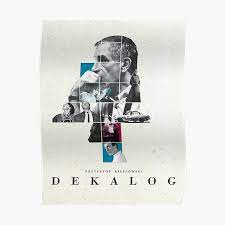
"Dekalog 5" (1988) and "Nazarín" (1958) - A Catholic viewer's thoughts

Criteria: The Catholic Film Podcast, hosted by Thomas Mirus and James Majevski, invited me to discuss Krzysztof Kieslowski's Dekalog 5 and Luis Buñuel's Nazarín (1958), in January 2021 and February 2022.

As they note in their website, it is a film club podcast devoted to works of high artistic caliber and Catholic interest, exploring the 1995 Vatican film list proposing 45 important films, celebrating the centennial of cinema.

This is the link to the website: https://www.catholicculture.org/commentary/category/criteria/


Below are the notes about the podcasts and the links.  Both films engage the value of the human person, and in different ways, the relationships with one another and God.


Dekalog 5 and A Short Film about Killing (1988)

https://www.youtube.com/watch?v=uYdtpAoLjo8


This film makes us confront on a visceral level the horror of taking a human life, even the life of someone we might find despicable. It is the fifth installment of Dekalog, the famous Polish TV series inspired by the Ten Commandments.


Dekalog: Five, which was expanded into the feature-length A Short Film About Killing, coincided with an intense debate over capital punishment in Poland, and in the year of its release (1988) the nation finally suspended use of the death penalty.


Catholic film scholar Maria Elena de las Carreras often uses Dekalog: Five to teach her students at Cal State Northridge about the value of life. She brings a lively energy to the discussion along with a deep knowledge of Polish cinema and, in general, the work of filmmakers living in totalitarian regimes.


Thomas tracked Maria Elena down because of an article on Kieslowski she wrote for Crisis magazine twenty years ago—which, she tells us, she sent to Pope John Paul II, and received a letter from his secretary saying it had been read “with great interest”.


Nazarín (1958)


https://www.youtube.com/watch?v=l6ts3b0xyD0


One of the boldest inclusions on the 1995 Vatican film list comes from an atheist director well known for his anti-clerical films, Luis Buñuel.


His 1958 film Nazarín does not seek to discredit the Church by portraying an obviously hypocritical, venal or sensual priest. Rather, protagonist Fr. Nazario is a Quixote figure, unable to make any difference in this miserable world no matter how strictly he follows his religious code.


Film scholar María Elena de las Carreras returns to the podcast to talk about Buñuel (1900-1983) as an artist unable to escape his post-Tridentine Spanish Catholic upbringing. His vision replaces the supernatural with humanism, yet he does not believe even this can save us. For Buñuel, whatever moments of human kindness we may encounter along the way cannot change the fact that life is hell.


It is interesting to compare Nazarín with many other priest films, including Monsieur Vincent (1947)Diary of a Country Priest (1951); The Silence (2019); The Fugitive (1947); and Léon Morin, Priest (1961).


Sunday, July 11, 2021

Psychological horror and the faux-documentary make a splash in Andrés Kaiser's debut feature "Feral" (2018)


“Aquí es alguien que busca a Dios y se le aparecen estos niños salvajes, cómo abre puertas oscuras, desatando demonios”. 


(Here is someone who is looking for God; these wild children appear; dark doors are open, unleashing demons)


Andrés Kaiser, El Universal (Mexico City), September  26, 2020


A remarkable debut film by Andrés Kaiser, Feral is a self-assured exploration of psychological horror and the documentary style. And as such it is a befitting choice for the new series at the Latin American Cinemateca, Cine Nepantla - Celebrating liminal spaces in film, music and poetry. Taking its name from the language of the Aztecs in the 16th century, ‘nepantla’ describes the state of living in-between different cultures, reflecting the encounter of the Hispanic and indigenous worlds. By extension, this new screening series presents titles that open up a rich dialogue about style, substance and context, from multiple perspectives.


Feral was the film selected for Cine Nepantla in 2020. It would have been screened last March at the Downtown Independent – the site of the Azteca theater in the thirties and forties, a venue in downtown Los Angeles showing Spanish-language cinema. The screening was cancelled, and also the Q&A with director Andrés Kaiser, due to the Covid-19 pandemic. The unruly virus also impacted the film’s release, after a successful run in festivals in Mexico and internationally in 2019.  


Born in San Luis Potosí in 1984, and studying directing and screenwriting in Madrid, Andrés Kaiser brought to this film his experience as an editor – among his credits, episodes of the TV prison series Capadocia (2012) and Drunk History: El lado borroso de la Historia (2016, 2017). He wrote several drafts of Feral in the workshop of renowned Mexican journalist and screenwriter, Vicente Leñero, an important member of the 1970s New Mexican cinema, together with Arturo Ripstein, Felipe Cazals and Jaime Humberto Hermosillo.  From conception to screen, the project took seven years.


 Built as a television news investigative report set the present time, Feral tells the story of Juan Felipe de Jesús González (Héctor Illañes), a former Benedictine monk who became a psychoanalyst living as a hermit in the Oaxacan mountains. He left the Church but not the faith, and in the process of trying to re-educate three feral children, recorded on dozens of videotape, destroyed himself and them. Twenty years after the fire that killed them, a television crew revisits the location and interviews the villagers nearby, to piece together what truly happened. 


The plot is built as a documentary reconstruction of these tragic events – à la Citizen Kane (1941) - remembered from multiple perspectives over this twenty-year gap. It includes interviews, news footage and a cache of the fateful experiment’s videotapes.  The multilayered narrative combines intersecting threads that shed light on a troubled individual’s psychological unravelling. The first one is the ex-monk and friend, José Ángel García playing himself, based on the true story of a monastery in disarray after the Second Vatican Council.  It provides the historical context of the film, and a vehicle for its political critique. The second set of stories involve those Oaxacans who befriended the hermit, especially Eustaquio (José Luis González Sánchez, a non-professional actor), providing a human glimpse of a man who meant well. In this second narrative thread, Feral takes several cues from Canoa: A Shameful Memory, the 1976 landmark political film by Felipe Cazals, a fictionalization of a true event shot as a television reportage, about superstitious peasants and a local priest involved in the massacre of university employees alleged to be communists. Feral shares its story structure, the ominous setting, the suspense and the horror.


 The use of “discovered” footage provides Feral its strong narrative spine, since it increasingly reveals the pieces of the puzzle.  Even though the viewer knows from the beginning the fate of the protagonist and his wards, the suspense is skillfully built, like the classic Sunset Boulevard (1950), Canoa and television procedurals. In this case it is done through the carefully crafted ominous musical score and sound effects, and the geographical setting (the mountains of Cuernavaca standing for Oaxaca, in exquisite crane shots). The found footage follows the technique of The Blair Witch Project (1999) by making the black-and-white video images look and sound old and scratchy, revealing and concealing simultaneously.


 The casting process resulted in an interesting set of performances – from non-professional actors, including the three children, the Indian woman speaking Mixe, and Eustaquio; to academics playing themselves as historians, like John Mraz, a Latin American film and literature expert; to professional actors. The director noted that he worked over one year with Farid Escalante, Juan Galicia Reséndiz and Kari Ramu - the boys and girl he selected from over 150 - to achieve the movements of children raised in the wild.  Kaiser has mentioned François Truffaut’s L’enfant sauvage (1970), based on a true medical case, and William Golding’s 1954 novel Lord of the Flies, as references.


Feral also sinks a few roots in the cinema of Luis Buñuel, showing the family and the Catholic Church as repressive institutions par excellence. The use of family photos focused on a castrating mother, and the shots of the beautiful baroque church as an impenetrable fortress function as visual explanations on how the protagonist – and his brother (José Concepción Macías), in a surprising narrative twist - became monsters. Taking a thematic cue from Canoa, evil is shown as intangible and embodied in those that claim to represent God. The director himself has made observations in interviews about faith and family as the locus of horror (1).   

 If these religious overtones, made explicit in the final montage, do not stay at the forefront of  the film, it is because Feral is conscious of its own techniques to the extent that one may say that the faux-documentary style is Feral’s real subject. It makes for great genre pyrotechnics, and perhaps, once the pandemic allows it, Feral may still make a splash, like the bold arrivals of Guillermo del Toro’s Cronos and Alejandro González Iñárritu’s Amores Perros, coming out of left field, did in 1993 and 2000.


Notes


(1) Alessandra Rangel, “Andrés Kaiser – el cine mexicano de género está más vivo que nunca”, October 6, 2020.https://www.palomitademaiz.net/andres-kaiser-el-cine-mexicano-de-genero-esta-mas-vivo-que-nunca/


List of Sources


Film at Lincoln Center - Scary Movies series. New York, September 3, 2019. https://www.filmlinc.org/films/feral/. Post-screening interview: https://www.youtube.com/watch?v=yERVl-w2fkY


"La historia de un religioso que halla a tres niños busca un Ariel". El Universal, September 26, 2020.

https://www.eluniversal.com.mx/espectaculos/la-historia-de-un-religioso-que-halla-tres-ninos-busca-un-ariel


Lang, Jamie, “Los Cabos Best Mexican Film ‘Feral’ Picked up by One Eyed Films”. Variety, November 30, 2018. https://variety.com/2018/film/global/feral-sales-rights-one-eyed-films-1203066298/


Ortiz García, Eric, “Fantastic Fest 2018 Review: Feral, Andrés Kaiser's Worthy Debut Feature”.

Screen Anarchy website, October 4, 2018.  https://screenanarchy.com/2018/10/fantastic-fest-2018-review-feral.html


Podcast: Filmmaker Andres Kaiser talks the faux Mexican doc "Feral" at Fantastic Fest [2018]

https://soundcloud.com/horror-happensrs/filmmaker-andres-kaiser-talks-feral


Thomas, David. Review of Feral. Sounds and Colours website, September 16, 2019. https://soundsandcolours.com/articles/mexico/feral-47704/

Thursday, May 13, 2021

Verbena Trágica (1939), digital preservation presented by the Latin American Cinemateca and the U.C.L.A. Film and Television Archive. May 13, 2021.

The Latin American Cinemateca of Los Angeles teamed with the U.C.L.A. Film and Television to screen Verbena trágica, a Spanish-language film released in 1939 – the year of Gone with the Wind and Mr. Smith Goes to Washington. The Archive made a digital preservation of a Library of Congress 35mm print.

Verbena trágica was the second film made by Cantabria Films, the company founded by one-time producer Jaime del Amo, a businessman descendant from an old Californio family, with one of the 18th century Spanish land grants in the South Bay. 


Filmed between May and June 1938, this tight melodrama, distributed by Columbia Pictures, may look like many low-budget productions of the 1930s, but it stands out for several reasons. The Library of Congress included it in the National Film Registry for its cultural and esthetic values, and the U.C.L.A Film and Television Archive included it as one of the thirty-plus films it presented in the 2017 series “Recuerdos de un cine en español: Latin American Cinema in Los Angeles, 1930-1960”, of which I was one of the curators.  This extensive program was part of the Getty-funded Pacific Standard Time: Latin America in Los Angeles.


Unfolding during a few hours in New York (Harlem?), on Día de la Raza, or Columbus Day, an immigrant Spanish family is destroyed by the same atavistic forces that poet and playwright Federico García Lorca, Italian operas and mafia movie plots, see at play in the Mediterranean world: sullied family honor and the relentless pursuit of revenge. The traditional “verbena”, a popular form of holiday celebration in Spain, functions here merely as the background of a tragic story surprisingly devoid of picturesque touches, even linguistic ones, but with assorted peninsular, Caribbean and South American supporting characters spending leisure time in a typically Spanish café. 


The film has a solid cast of Spanish actors: Luana Alcañiz, Pilar Arcos and Juan Torena.  They had been steadily employed during the decade-long blossoming of Spanish-language versions made by Hollywood studios like MGM, Paramount and Fox first, and then independent companies like Cantabria Films – del Amo’s short-lived foray into moviemaking. 


Renowned Mexican actor Fernando Soler came briefly to Los Angeles to star in the film as Mateo Vargas, the larger-than-life neighborhood boxer who returns from a brief stay in prison, to discover that his wife Blanca (Luana Alcañiz) has betrayed him with his protegé Claudio (Juan Torena). Mediating the unravelling of the marriage is Blanca’s mother, Mamita (Pilar Arcos), who shares with Blanca the final scene, a triumph of matriarchal resilience.  


Spanish journalist and writer Miguel de Zárraga, who had settled in Los Angeles by the late 1920s, and was a key figure in the Spanish film colony of Los Angeles, provided the Spanish dialogue to the original English-language screenplay written by Jean Bart.  It must have struck de Zárraga odd that the characters talk about returning to Spain as if no Civil War was raging between 1936 and 1939.  As head of foreign publicity at Columbia Pictures since 1936, de Zárraga surely wore more than one hat, as he did in so many of the Spanish versions of the studios.  Prolific filmmaker Charles Lamont – known before and after Verbena trágica for his comedy shorts and features - Charley Chase and Three Three Stooges for Columbia, and later Abbott and Costello vehicles – showed his flair for comedic touches, especially in the recurring gag of Mamita slapping her teenage son Pepito (Jorge Mari) for no good reason.  Song numbers by Pilar Arcos, a renowned singer and wife of Fortunio Bonanova, of Citizen Kane opera singing fame, and Sergio de Karlo soften the tragedy but stop short of turning it into the Mexican-style melodrama it could have been expected.


Verbena trágica was the second and last production of Cantabria Films, the venture started by Jaime del Amo. Made in 1938, as reported by trade publications, it opened at the Teatro Hispano in Harlem, and was briefly reviewed by the New York Times. “While the film is well done, its only novelty consists in the ending, something quite different from the usual “cliché” wrote H.T.S. on March 13, 1929. It seems to have done well at the Spanish-language film market in the U.S. Distribution by Columbia Pictures assured exhibition in South America.  But neither Vida bohemia – Cantabria’s first picture, released in 1938, also somewhat of an oddity – nor Verbena trágica could compete against the super popular Mexican productions released in the U.S. nor the constraints of Columbia’s distribution contract.


Verbena trágica is emblematic of how original Spanish-language filmmaking in Los Angeles fared in a business that had developed the technology of dubbing and subtitling Hollywood films by the mid-1930s.  Once Mexico and Argentina developed solid film industries in the sound era, early in the 1930s, Verbena trágica was the ultimate oddity, neither an American studio film, nor a melodrama with musical numbers from Mexico or Argentina. And yet, it’s a picture that captures a moment in time … and remains a pleasure to watch.


Verbena Trágica was streamed on May 13, 2021.

https://www.cinema.ucla.edu/events/2021/05/13/verbena-tragica 


List of sources


A note on recent books on Spanish-language films made in the U.S.  Besides the U.C.L.A. Archive series of 2017, the PST LA/LA project included a couple of relevant books about this time period, spearheaded by Jan-Christopher Horak, then director of the Archive.


Hollywood Goes LatinSpanish-Language Cinema in Los Angeles (2019), edited by María Elena de las Carreras and Jan-Christopher Horak. 


In 2017, the International Federation of Film Archives organized a symposium on the making of Spanish-language films in the U.S., which brought together scholars and film archivists from all of Latin America, Spain and the United Sates to discuss the many issues surrounding the creation of Hollywood’s “Cine Hispano”. The papers presented in this two-day symposium were collected and revised for this joint publication of the U.C.L.A. Film and Television Archive and FIAF. 

Cinema between Latin America and Los Angeles (2019), edited by Colin Gunckel, Jan-Christopher Horak and Lisa Jarvinen.


This collection describes Spanish-language film culture in the U.S., viewing Los Angeles as a crossroads for the distribution and exhibition of Latin American – especially Mexican - cinema.


The bilingual catalogue of the film series “Recuerdos de un cine en español” can be accessed through the Archive’s website: https://www.cinema.ucla.edu/events/latinamericanfilm


Specific sources for Verbena trágica can be found in:


Daniel Egan, America’s Film Legacy: The Authoritative Guide to the Landmark Movies in the National Film Registry. Bloomsbury Academic & Professional, 2009, 284-286.


Library of Congress online catalogue, https://www.loc.gov/item/mbrs00008355/, accessed May1, 2021.


Carl J. Mora, Verbena trágica. Excerpted from Mexican Cinema. Reflections of a Society, 1896-2004. 3rd edition, McFarland, 2005.  https://www.loc.gov/static/programs/national-film-preservation-board/documents/verbena_tragica.pdf, accessed May 1, 2021.


Saturday, February 29, 2020

The question of evil: "Irradiés" and "There Is No Evil"

The last two films shown in the Competition section are in the tradition of political awareness that has shaped the Berlinale for 70 years: Irradié / Irradiated, directed by the veteran Cambodian filmmaker Rithy Panh; and Iranian director Mohammad Rasoulof’s There Is No Evil.  Shown back to back yesterday, they are also in conversation with one another, beyond their historical, cultural and political specificities, since their underlying theme is the value of human life in contexts of evil.  They both have a moral urgency that elicited a warm reaction from the hardened journalists in the press screening I attended.  A few minutes after the Iranian film finished, I overheard a Spanish journalist filing his report over the telephone, saying: “I cried many times”.

In Irradiés, a documentary essay on evil in the 20th century – name the usual suspects, they are all there – Panh revisits the horrors of history from a perspective grounded in his own family history: the destruction of parents and siblings in the Killing Fields of Cambodia, at the hands of the Khmer Rouge, and, ultimately, his escape to freedom via Thailand. He eventually settled in France, graduating from the topnotch Institut des hautes études cinématographiques.  The antecedents for his latest documentary are in plain sight, beginning with Night and Fog (1956), Chronique d’un eté, the 1961 Rouch/Morin documentary, and most of all the work of Chris Marker, with Sans Soleil (1983) coming to mind.  Panh shares here their modernist impulse to see politics from the lens of the personal, and eschewing a Griersonian approach in favor of an experimental form.

Irradiés, however, is not a derivative or redundant work. In the press conference, Panh was asked about his decision to work for most of 80-plus minutes with a three-split image on the screen: the central panel is related but not similar to the two identical lateral ones, using the music as a somber and sometimes discordant counterpoint to the visuals. Panh faced the same issue a young Alain Resnais confronted when deciding on a narrative, visual and sound structure for Night and Fog: footage from the concentration and extermination camps had been used until then as evidence for the Nuremberg trials, and though professionally edited by the Allied teams in charge of the prosecution, they were not arranged for esthetic purposes.   This is a matter that comes in my documentary class time and again: how do you/should you portray “the horror, the horror” without trivializing its nature? Do you/should you make choices that privilege film language over ethics? Peter Jackson approached it, but from another angle, in the drastic shaping of archival footage from the Imperial War Museum for They Shall Not Grow Old (2018).

Rithy Panh started by responding that Irradiés is above all a "shout", a reminder of how evil irradiates. His challenge was to keep the attention of the audience past the first minutes of  
watching images of brutality. How to make the images resonate was the director’s guiding principle. If you build the work as a catalogue of horrors, the director continued, the audience checks out.  The rhythmic repetition of the three-split image structure is a form of abstraction that helps the viewer concentrate and dive into the materials. If the images speed by, truth is lost.

An Italian critic friend of mine, noted as the credits were rolling: “Ecco un capolavoro”. Beautifully said.

Shot in Iran under difficult circumstances, Mohammad Rasoulof’s There Is No Evil is a work of great courage and beauty.  Like Jafar Panahi and other Iranian directors who have gained international recognition, Rasoulof is at odds with Iran’s mullahs, his latest trouble being a pending prison sentence for  “propaganda against the system” – namely his 2017 drama A Man of Integrity, that won the Un Certain Reard prize at the Cannes Film Festival. On the occasion of the Berlinale, which as expected he could not attend, his plight was covered by the accredited press. An empty spot with his name was set up for the press conference.

Mohammad Rasoulof 
There Is No Evil is comprised of four interlocking stories involving a very specific moral choice, to be or not to be an executioner of prisoners, as determined by the state. Like Kieslowski’s Dekalog (1988), individuals are faced with moral dilemmas, for which there are attenuating circumstances, or so it seems.  In the four stories the male protagonists are part of the prison system – a metaphor for the regime at large – but their circumstances and decisions, widely different. The narrative structure of each episode is shaped by the social, economic, intellectual and geographic specificities of each case – the society at large. The viewers find themselves observing life in Tehran and then in the countryside, sharply photographed in the city, and with great beauty in the countryside.  The minute unfolding of the first story sets the tone for the film with its unexpected and stunning twist in the final shot. It is the peg on which Rasoulof, who also wrote the screenplay,  hangs the progressively more outspoken critical tone of the ironically yet poignantly titled film.  It is all about how each character – and by extension ourselves, the viewers, through fear and pity, as Aristotle would have argued – will respond to “the horror, the horror”.  

There Is No Evil shares with Dekalog a profoundly humanistic point of view, a stubborn reminder that all life has value, and that maybe, at some point, facing evil, we will have to make a choice. In the context of today’s Iranian politics, it takes courage – and European production funds – to make such a statement.

The international jury will award the prizes tonight.  I hope that these two magnificent works will be recognized and launched into a long viewing life.  


Friday, February 28, 2020

Siblings Fabio and Damiano D’Innocenzo, Bill and Turner Ross made two sensational movies.

A delight of the Berlinale every year is to find a film or two that will make students share emotional truths on the screen, as Scorsese notes in “The Persisting Vision”, an essay of 2013. Last year was what turned out to be Agnès Varda’s farewell, Varda, by Agnès, a documentary about her love of cinema.  Now available on DVD, I have used it this semester, a great gift of the director to my emerging filmmakers.

Bill and Turner Ross
Fabio and Damiano D'Innocenzo
I have seen many films these past week, interesting for a number of reasons, but the two I discuss below are excellent for the classroom: Broken Nose, Empty Pockets, the fifth feature by Bill and Turner Ross, filmmakers in their late thirties, working from New Orleans; and Favolacce, or Bad Tales, second film by Fabio and Damiano D’Innocenzo, twins in their late twenties, born in the outskirts of Rome and not the product of film school. Both works defy the pigeon-hole of genres, and categorization in general. Hence, their value to show students how to think outside the fiction/non-fiction framework, in the first film, and the subversion of narrative logic, in the Italian case.

I had read about Bloody Nose, Empty Pockets, directed by Bill and Turner Ross in the Los Angeles Times when it premiered in Sundance in January.  When I saw it in the Panorama section of the festival, I understood why this “documentary” is the right one to bring up the key philosophical issue on day one of the documentary class: what makes a film a documentary.  Bloody Nose is a “creative treatment of actuality”, per Grierson, but like Peter Jackson’s They Shall Not Grow Old (2018), it ultimately escapes the boundaries of the non-fiction film. This question is unavoidable after viewing Bloody Nose, one that pits the purist against the pragmatic - the critics that still object to Flaherty enlarging Nanook's igloo versus those that forgive interventions in search of a larger truth.

The Ross brothers had a lively Q&A with the public after the screening.  They described how they were interested in making a film about “a space of shared events” – in their case, a bar. A source of inspiration, they noted, had been The Iceman Cometh, the Eugene O’Neil 1940s play, where the saloon is the “container” where the hopes, illusions and despair of the characters play out.  A bar in New Orleans, the Roaring 20s, became the locale where in November 2016 they shot the interaction of people they cast during one unbroken scene for eighteen consecutive hours, with two cameras and fifteen mics.  The conceit was no script, no staging, and a point of departure: the last night before the watering hole closes its doors forever. Twenty people – bar habitués, carefully selected to represent “archetypes” - reacted to the “stimuli”, as the directors referred to this set up, and they in turn responded to their dialogue and movements. In direct cinema style, no conflicts were staged but the brothers gave their actors some cues, so that they would have a dramatic arc within which to play themselves.  The Ross siblings captured some raw emotional truths on the screen, shaped and trimmed in an editing process that unfolded over three years, while they supported themselves doing other film work.  The music is purely diagetic, coming from the bar’s juke box. 

To the brothers’ surprise, Sundance selected Broken Nose, Empty Pockets for their always very strong documentary section, a decision that opened up a frank conversation about the nature of documentary.   The brothers recounted how the Sundance programmers argued that Broken Nose “constructs situations in order to invite a level of chaos and candor that feels more fitting for the nonfiction space.”

After their Q&A, I approached the very personable Ross brothers to ask about what comes next.  Distribution is still in the works, they replied. One of them could not help but say about the Berlinale, “Being here is f … unreal”.  

In Favolacce (a made-up Italian noun, with “fabulation”, perhaps, in its root), the D’Innocenzo siblings plumb a dark quarry, one that the English-language translation of the title aptly captures: a fictional story with moral and/or esthetic connotations.  The intriguing voiceover that opens and closes the film is both self-reflexive and revelatory; it alerts the viewers that the tragic events at the heart of the story may also be embroidered by fabulation; that there is something else to the story of middle-class children and their parents, set in a cookie-cutter suburban development encroaching on nature during a torrid summer.  Realism and logical plot construction may be a façade waiting to be subverted.  Fellini’s 8 ½ and Buñuel’s logic of dreams help make sense of the unravelling of four pre-teenagers, whose fathers are totally toxic and the mothers ineffectual, while other adults are literally and morally dangerous. Since realism is not the name of the game, the audience is  challenged to sort out what is actually happening on the screen, and who doing the telling.  Like the opening monologue of Nolan’s The Prestige (2006), the clue to the story is hidden in plain sight. 

The press conference was lively; when asked about their influences, one of the D' Innocenzo brothers provided an eclectic list: Gus Van Sunt, Takeshi Kitano, John Cassavetes, John Ford, Billy Wilder and Chantal Akerman. Regarding Italian directors, they acknowledged Matteo Garrone, Ermanno Olmi, and Pietro Germi as references.

Broken Nose, Empty Pockets, and Bad Tales merit a wide audience, and their directors, the recognition that fresh talents have arrived to the film scene.


Tuesday, February 25, 2020

Back to the source: Carlo Collodi's "Adventures of Pinocchio" (1883), redux

Three slabs of the Berlin Wall in Potsdamer Platz
I am in Berlin again, attending the 70th edition of its film festival.  I first landed in the city in February of 1985, its 35th, thanks to the invitation of Argentine filmmaker Manuel Antín, then director of the Argentine Film Institute, who had appointed me to the Film Rating Commission, and included me in the Argentine delegation.  The wall still divided the city, and it seemed unbridgeable. Manuel Antín advised me to get a press credential for the following year, and I have been coming ever since, skipping only two or three times. What a treat it has been, the highlight of my professional year.  I saw the collapsed wall in February of 1990, three months after it happened – an ideology and a praxis shattered  to pieces. At the time you could pick bits of concrete from the two walls and no-man’s land had stood. Now for a few euros you can get a small piece encased in acrylic.

Every screening I attend in the Competition – a lean 18-title section this year - opens vistas on unexpected things, since I read nothing beforehand, and I get to the Berlinale Palast in Postdamer Platz as much a blank slate as I can be.

Matteo Garrone’s visually dazzling Pinocchio was great treat for me on Sunday, mainly for its Proustian reverberations; but also because the film fits Bruno Bettelheim’s observations on the moral and pedagogical role of fairy tales. Like Capra with the Why We Fight series in WWII, Disney’s handling of the Pinocchio story in the 1940s – “sanitizing” could be, but is not, the right word – shape the way we perceive it today.  It seems as if Collodi has been edged out of existence outside of Italy, or perhaps more kindly made a mute presence everywhere else. Watching this Pinocchio I thought that Pope Francis – a cinephile best explained by his Italian Argentine background – would love it, and have much to comment about fatherhood in a Sunday address to the faithful.

 I had never known who Carlo Collodi - author Carlo Lorenzini’s pen name - was, even though his was a familiar from my childhood. Courtesy of the Britannica, I absorbed the details of a life: Born in Tuscany in 1826 into a working class family, and after a stint in the seminary where he gained an education, Collodi became a journalist supporting Garibaldi and the Risorgimento against Austria, publishing political satires until the reunification of Italy as a kingdom in the 1860s. He then left political writing for children’s literature. I realize that the immediate success of the book in Italy in the 1880s quickly led to translations, and that it must have become a children’s favorite for the generation of my grandparents – born between the 1890s and the 1900s.  I wonder what they made of it.  How did they absorb the adventures of an obnoxious and disobedient puppet, that can still scare the hell out of kids (maybe not the media savvy ones of today). How did they relate to a bratty character that ditches school and wants to have fun.  The novel is fraught with unimaginable dangers, all of them at the hands of  cruel or selfish adults: robbery, kidnapping, hanging, slavery, near drowning, transforming into a donkey, before Pinocchio is reunited with his loving creator Geppetto, courtesy of a mother-figure fairy and the ghost of a talking cricket Pinocchio killed with a hammer at the beginning of the story. But all’s well that ends well. In the serialized novel, the protagonist dies in chapter 15 but the clamor of readers made Collodi resurrect him in chapter 16. 

Matteo Garrone, the director of the brutal Gomorrah (2008), about the Neapolitan camorra, and a take on fairy stories, Tale of Tales (2015), wrote and directed this version, casting the exuberant Roberto Benigni as Geppetto, and the cute child actor Federico Ielapi (who won over the journalists at the press conference) who looks awfully wooden behind the makeup and costume, sporting the proverbial pointy noise. 

What makes Garrone’s a fascinating take on Pinocchio is the issue of what a Midwestern American did with the original novel in the early 1940s when looking for a project after the success of the lovingly-gestated Snow White. This Disney layer of meaning is now such an integral part of the story, that one imagines that “When You Wish upon a Star” may have been culled from Collodi’s original.

The journey from an Italian 19th century sensibility and landscape – how to live, work, raise children in a society that was quickly being industrialized – to an 20th century Anglo-Saxon mindset – is the intriguing part for me. The way this creative process unfolded at the Disney studios in Los Angeles has already been written, and it is fun to read about it: the technological achievements in animation in Disney’s second feature, and Pinocchio very soon becoming an archetype recognizable everywhere.


Now I have an idea for an assignment in the adaptation class I often teach: ask the students to read the original Collodi novel, and describe the nuts and bolts of the adaptation process in the Disney and Garrone adaptations, observing the key differences in text and context.  Not unlike what I have been doing since the same 2012 with the Taviani brothers’ Caesar Must Die, the Gold Bear of that year, and the 1953 Joseph L. Manckiewicz adaptation of Julius Caesar. Classics matter and Shakespeare speaks to us today. Now its Collodi's turn.  “Para novedades, los clásicos”, as Miguel de Unamuno duly observed.